
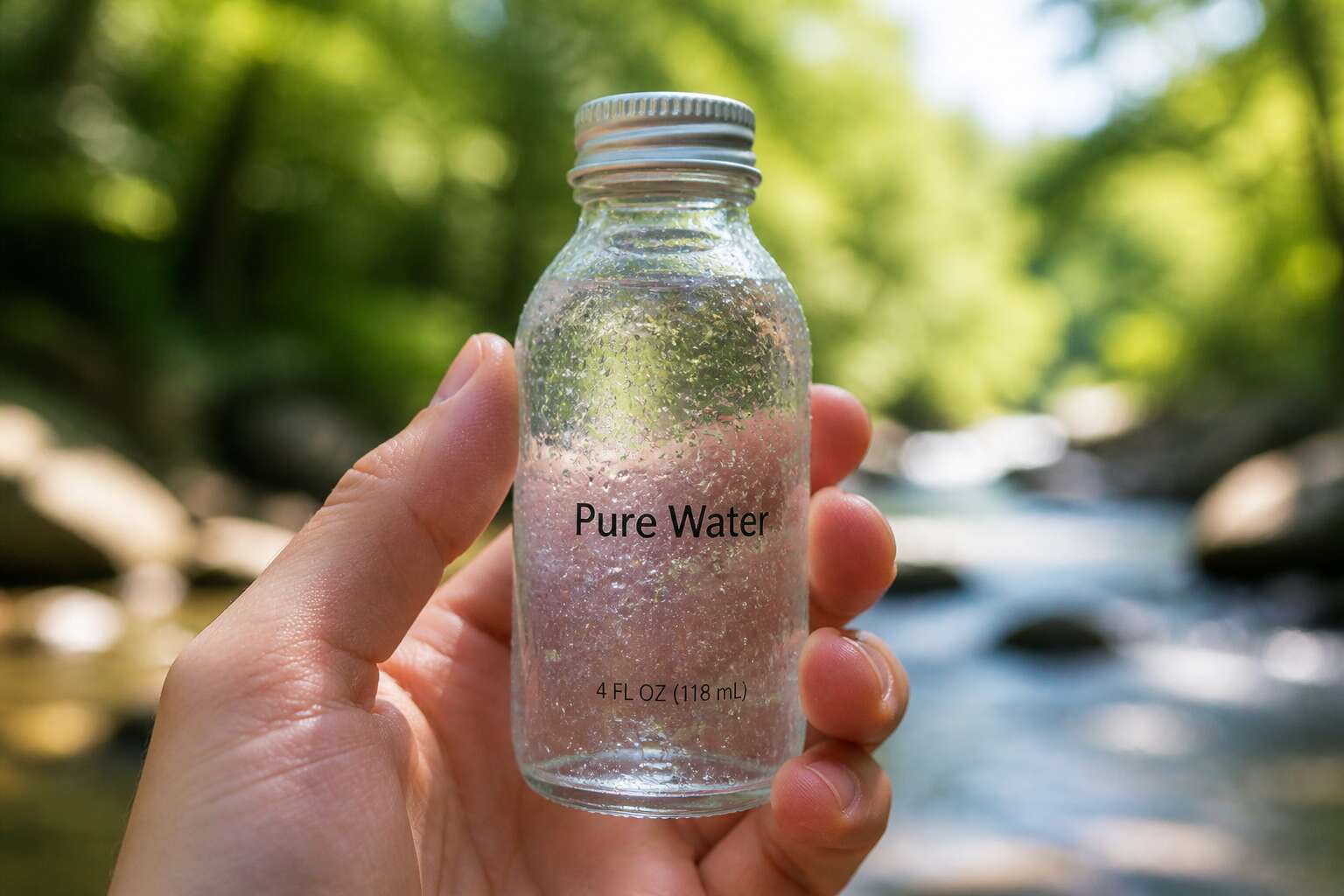
Why Choose Small Water Bottles?
Portability and Convenience
What is 63 milliliters? That is the total volume inside a standard bottle of bottled water 4 oz, a quantity that looks almost absurd next to your gym flask. Yet this tiny portion slides into a shirt pocket, a school bag, or that useless cup holder in your bakkie. During a Durban summer, I watched colleagues wrestle with two litre slabs while I simply slipped a pair of these into my jacket. The portability is frankly comedy gold.
The real convenience emerges in everyday logistics:
- One fits inside a child’s lunchbox without crushing the sandwich.
- Two sit neatly in a car’s centre console for traffic delays.
- Three disappear into a camera bag for a day hike.
Bottled water 4 oz solves a specific problem: hydration without the burden of carrying a vessel. It appears exactly when you need it, then vanishes from your pocket. That is efficiency with a touch of absurdity.
Portion Control for Kids
Consider the awkward arithmetic of a child’s hydration. A 500 ml bottle is a promise of a mess, a prelude to a damp school bag and a stained workbook. The bottled water 4 oz size turns that equation on its head. It presents a finite amount, a complete portion that a small stomach can actually process before the next lesson begins. This is not about restriction; it is about a calibrated allowance that meets their physiological reality.
For a parent, this small format provides a discreet form of control. It removes the guesswork. You are not negotiating with a child over how much they have drunk from a large, opaque container. Instead, you hand them a clear, finished product. The consumption is binary, either the bottle is full or it is empty. This clarity reduces mealtime friction and establishes a quiet routine around adequate fluid intake.
The psychological benefit for the child is significant. A large bottle can feel like a chore, a towering task to conquer. A small one feels like a manageable, personal possession. It gives them ownership over their own hydration without overwhelming them. This sense of agency is critical for developing healthy habits.
The benefit translates into practical terms for the caregiver:
1. Reduced spillage: A smaller volume means a smaller cleanup zone.
2. Accurate intake: You know precisely how much liquid was consumed.
3. Less waste: A child is more likely to finish a small bottle, avoiding wastage.
Ultimately, this portion size is a lesson in restraint and self-awareness. It teaches a child to recognise their body’s signal for thirst and respond to it with a sufficient, not excessive, response. It is a quiet, unassuming tool for instilling a sense of mindfulness that a 1.5 litre plastic jug could never hope to achieve. The small bottle becomes a ritual of self-care, a tiny, private agreement between the child and their own needs. Does a larger format offer that same opportunity for respect?
Ideal for Events and Sampling
A hundred half-empty bottles litter the table after any event. The bottled water 4 oz size eliminates that scene. I’ve watched organisers struggle with bulk dispensers and sticky spill zones. This small format changes the logistics of sampling. A customer can try a product, cleanse their palate, and move on without wasting a drop. For festivals, corporate launches, or wine routes, the logic is simple:
- One hand to hold, no standing around.
- Perfect portion for a taste or a quick rinse.
- No refill station, no queue, no mess.
The bottled water 4 oz bottle becomes a practical tool for the sampling process. It respects the guest’s time and the host’s budget. That is why smart event planners in Cape Town and Johannesburg now order these by the crate.
Travel-Friendly Hydration
Picture this: you are four hours into a flight to Johannesburg, and the cabin crew’s beverage cart is a distant mirage. Your mouth feels like the Kalahari. That is when the small format saves you. The bottled water 4 oz size fits neatly into the seatback pocket, next to the safety card you have already memorized. No wrestling with a giant plastic bottle that drips condensation onto your laptop. No chugging to avoid the indignity of asking for a refill.
Travel logistics have a sneaky way of complicating simple needs. Airport security regulations treat larger liquids with suspicion, but a small bottle passes without a fuss. Once you land, it disappears into a console holder or a handbag’s side pocket. For road trips along the Garden Route, the same principle applies. It is hydration without the bulk, a clever trick for those who like to move light.
This size also respects your body’s actual rhythm. You sip when you are thirsty, not when you feel obligated to finish a 500ml monster. Gone are the days of a warm, half-drunk bottle rolling around under the passenger seat. Consider the practical benefits:
– Fits in any cup holder, from the bakkie to the budget airline tray.
– Eliminates the need to share a communal bottle with questionable hygiene.
– Keeps your bag light, leaving room for the more important items, like snacks.
The bottled water 4 oz option is not a novelty. It is a calculated choice for the frequent traveller who values their space and their sanity. You finish it, you recycle it, you move on. It is the quiet workhorse of your carry-on, never demanding attention but always performing when needed. That little bottle is often the difference between a smooth journey and a desperate search for a water fountain. Leave the heavy litres for the gym bag. For the journey, this is the smart way to stay refreshed. The old bottle becomes a souvenir of a trip well managed.
Aeroplane Carry-On Rules
Few travellers pause to consider the arithmetic of airline security. The global standard for carry-on liquids is 100 millilitres, a figure that renders the average 500ml bottle a non-starter. The bottled water 4 oz size, however, sits perfectly under that limit. It converts a bureaucratic hurdle into a non-event. You pack it, you forget it, you board without the ritual of decanting into those flimsy little jars at OR Tambo.
Security personnel are not the only gatekeepers. The economy class seat pitch on most carriers leaves little room for manoeuvre. A large bottle becomes a hazard, a cylinder of potential spills for you and the passenger next to you. The small format changes the psychology of the flight. You are not rationing a precious resource. You are sipping from a vessel that is already portioned for the journey. The mental load reduces when you do not have to track how much is left.
Consider the specific constraints of the modern air travel experience:
1. The tray table locks down for landing, and a half-empty litre bottle has nowhere to go.
2. The seatbelt sign illuminates, and your bag is in the overhead compartment, out of reach.
3. The cabin pressure dehydrates you, but you cannot stand up to access your luggage.
The bottled water 4 oz option solves the last two problems. It stays in your pocket or the seatback pouch. You retain access to hydration even when you are strapped in and confined. The tiny footprint means you can keep it on your person without infringing on the limited personal space afforded by the modern aircraft. It is a matter of maintaining control over your own physiological comfort in an environment where you have very little say. The size is not a compromise, it is a release from the burden of the oversized bottle.
Key Features to Look For in Mini Water Bottles
BPA-Free Plastic vs. Glass
The choice between BPA free plastic and glass for a 4 oz bottle is more than a matter of taste. The materials define how you use the product daily. Plastic offers flexibility in design, which allows for squeeze bottles useful for sauces or quick hydration. This is a significant feature for people who need a quick squirt of liquid, especially in a worksite environment.
Glass, on the other hand, provides an inert surface that does not interact with the contents. This is a key feature for those who notice the distinct aftertaste of plastic. For a small format like a bottled water 4 oz, the weight difference is manageable, making the glass a viable option for personal use. The rigidity of the material also means the bottle will hold its shape without concern for crushing in a packed bag.
When evaluating your needs, consider these specific traits:
– Durability and resistance to dropping.
– Thermal resistance for hot or cold liquids.
– The potential for the material to harbour odours or stains.
– The transparency of the vessel for checking contents.
There is a distinct tactile difference that separates these materials. A glass bottle carries a certain solidity that plastic cannot replicate. However, plastic remains the go-to for events where breakage is a financial concern. For a single serving of a bottled water 4 oz, this balance leads most buyers to select plastic for practicality and glass for purity of taste.
Seal and Leak-Proof Design
I have pulled more than one damp phone from a bag after a mini bottle betrayed its owner. The seal is the quiet component that decides whether your laptop sleeve survives the commute. For a bottled water 4 oz, the closure mechanics matter more than the bottle’s exterior finish.
Examine the liner where it meets the rim. A silicone gasket distributes pressure evenly, while a flat cardboard disc degrades after a few uses. Threads should engage smoothly; a cap that skips or tightens unevenly signals poor manufacturing tolerances. Flip-top lids deserve scrutiny, as a stress point at the hinge will crack long before the bottle is empty.
- A silicone gasket that seats flush against the rim without visible gaps.
- Threads that engage with minimal resistance and no wobble.
- A tethered cap, which eliminates the risk of losing the lid mid-trip.
These details separate a dependable vessel from a damp failure. A bottled water 4 oz that leaks will ruin a lunchbox or a work bag in minutes. A tight seal, once verified, stays quiet for months.
Labeling and Compliance
The label on a bottled water 4 oz carries more responsibility than most people assume. In South Africa, it must state the producer, the batch code, and the best-before date. That is not decoration. That is compliance.
I check for the registration number under the Foodstuffs, Cosmetics and Disinfectants Act. The water source should be named. A vague label makes me set the bottle down.
The specifics I look for:
- The manufacturer’s physical address
- The batch number for traceability
- The TDS reading or mineral analysis
These details confirm the water meets SANS 241 standards. Municipal water and spring water differ in mineral content, but both must be declared honestly. A bottled water 4 oz that passes that test is safe to hand to a child. Without those markings, you are buying an unknown, and that is a gamble I refuse to take!
Shelf Life and Water Quality
With a bottled water 4 oz, shelf life is not about the water going bad. It is about the container and the seal. Most mini bottles hold quality for 12 to 24 months. The water itself does not spoil, but plastic can leach if stored in heat. Check the best-before date anyway.
Water quality starts at the source. In South Africa, look for a TDS value. Low TDS means a clean taste. High TDS gives minerality. Both are safe if the label meets SANS 241. A sealed bottle preserves this profile. Once opened, drink within a few days. Stale water gains a flat taste. Glass holds flavour, but plastic is lighter. For any bottled water 4 oz, inspect these:
- The cap’s liner creates a leak-proof barrier
- The liquid is clear with no particles
- The plastic feels rigid, not thin
A tight cap matters more than the material.
Easy Grip and Child-Friendly Shapes
A child’s palm spans barely 7 centimetres. I’ve watched toddlers struggle with full-sized bottles and lose. A bottled water 4 oz with contoured sides fits small hands better. Ridges along the body give fingers traction, which matters when hands are wet or sticky.
Look for shapes that taper inward at the centre. This allows a child to wrap their palm around the bottle without straining. Wide caps also help. They give small fingers more surface area to grip!
- Short, squat bottles resist tipping
- Rounded edges prevent sharp corners against faces
- Soft-touch plastic adds friction
Balance matters. A full bottled water 4 oz should feel stable in a small hand. If a bottle is too tall, it becomes awkward. The right shape makes hydration easier for the child and less messy for you.
Uses Across Different Industries
Hospitality and Hotel Amenities
In the hospitality trade, the minibar is a test of attention to detail. The bottled water 4 oz appears as a compact refreshment, placed beside the kettle or in the bathroom vanity. It serves a practical purpose: guests can hydrate without opening a full litre.
This size also suits the hotel’s operational rhythm. Housekeeping restocks quickly, and the smaller footprint reduces waste. For conferences and executive suites, the bottle prevents spills on important documents.
Typical placements include:
- bedside tables for overnight thirst
- bathroom counters for post-shower sips
- meeting room tables for discreet hydration
The effect is a quieter guest experience, one where the hotel anticipates a simple need.
Corporate Gifting and Branded Events
Nearly every corporate event in South Africa ends with the same silent ritual: abandoned half empty 500 ml bottles on boardroom tables. The branded bottled water 4 oz changes that math entirely. A smaller vessel encourages full consumption, which means your logo stays in front of the recipient for the entire meeting, not just the first sip.
For companies that hand out promotional items, the utility of a small bottle is stark. A recipient will carry a 120 ml bottle to their desk, use it during a long call, and keep it on their desk afterward. It functions as a daily reminder, not a disposable afterthought. The economics work too. The cost per unit is lower, so you can stretch a gifting budget across a larger client list without looking cheap.
Branding teams often use the small format for specific purposes:
– Inserting into welcome packs for new staff
– Pairing with a branded glass for executive gifts
– Adding to registration bags at AGMs and industry summits
The compressible nature of the bottle means it fits into standard packaging without extra shipping costs. For a company hosting a large conference in Johannesburg or Cape Town, this is a practical way to distribute hydration across hundreds of delegates without the logistics burden of heavy crates. The key is the impression it leaves. The recipient sees a thoughtful, measured gesture, not an overstocked giveaway.
Healthcare and Medication Administration
In a sterile ward, the bottled water 4 oz provides exact measurement for oral medication. Nurses use it without disturbing fluid balance charts. A patient with dysphagia needs measured sips, not an uncontrolled flow. The small bottle fits beside a pill cup on a trolley.
For paediatric wards, the format offers simplicity. A child can hold it with two hands. The volume is enough to wash down a tablet. Common uses include:
- Mixing with electrolyte sachets for rehydration.
- Flushing a nasogastric tube after feeding.
- Diluting antibiotics for a tolerable taste.
This exact bottled water 4 oz serves patients who require strict intake monitoring. The measurement is visible, the waste minimal, and the bed remains dry. That is a benefit on a busy shift. In intensive care, every millilitre counts, and this format matches those numbers.
Beauty and Cosmetic Applications
The glamour of a skincare routine often hinges on precision. A splash too much of astringent, or too little dilution, can compromise the entire formulation. The bottled water 4 oz offers a controlled vessel for those exacting rituals, preventing waste and ensuring the integrity of the product remains intact.
Consider the process of mixing a clay mask or activating a powder exfoliant. The measured volume of the bottled water 4 oz creates the perfect slurry, dense enough to adhere to the skin without dripping. It transforms the chaotic act of pouring into a deliberate application. For makeup artists, this format is a portable apothecary.
A small bottle provides a sterile rinse for brushes or a precise medium for rewetting pressed pigments. The utility is distinct:
– Cleaning reusable silicone applicators between clients.
– Diluting a concentrated serum for sensitive patches of skin.
– Mixing a setting spray directly on a palette.
This volume aligns with the single session, so a bottle is opened, used, and either finished or sealed without oxidation. In a steamy bathroom environment, the sealed cap prevents the water from absorbing ambient odours from other products. The result is a consistent, pure base for any beauty concoction, kept stable and ready for the next application.
Food Service and Catering
In a professional kitchen, precision is not a virtue; it is a survival instinct. The bottled water 4 oz finds its place behind the pass, where a chef’s patience runs thin and measurements matter. Caterers use these small vessels for tasks that require exact hydration, from blooming gelatine to reviving saffron threads. The volume is modest, but the effect is deliberate.
Consider the catering station. A cook deglazes a pan with a splash of wine, then corrects the seasoning with a measured splash from a bottled water 4 oz. No open jugs, no guesswork. The format also suits:
– Reconstituting dried porcini for a sauce.
– Adjusting the consistency of a coulis without altering flavour.
– Providing a clean rinse for tasting spoons between dishes.
The small bottle keeps kitchen workflows tidy, and that is no small thing.
Retail and Convenience Stores
In a retail setting, the bottled water 4 oz earns its place through simplicity. Convenience store owners value its modest footprint on crowded shelves. It does not compete with one litre bottles; it sits beside the till, waiting for a shopper with a specific need.
The format attracts a particular kind of customer. Someone on a hot afternoon may not want to carry a heavy bottle. Another might need a small volume for a single purpose, a quick sip after a run or a relief for a parched throat. That demand stays steady across the day.
- A commuter grabbing one for a short trip.
- A shopper adding it to a basket to test the brand.
- A parent selecting one to dilute juice for a child.
The retail channel rewards the product for its turnover and shelf efficiency. The bottled water 4 oz converts a small shelf slot into a reliable revenue source.
Purchasing and Packaging Considerations
Bulk Order Quantities and Pricing
Bulk procurement changes everything about unit economics. When you order bottled water 4 oz by the pallet, the per-bottle price drops dramatically compared to case-by-case purchases. I have watched South African buyers save between 15% and 30% on larger volumes, though the final figure depends on the supplier and distance from their warehouse.
Here is what matters when calculating your order:
- Transport costs from Gauteng or coastal hubs
- Storage space and pallet dimensions
- Payment terms and lead times
Suppliers rarely quote a flat rate. The price fluctuates with raw material costs, fuel levies, and seasonal demand. A commitment to recurring orders locks in better pricing than a single large purchase. Mixed pallets allow you to combine bottled water 4 oz with other sizes without losing bulk discounts.
Custom Label Printing for Branding
Purchasing bottled water 4 oz in bulk involves packaging choices that go beyond the bottle itself. The film wrap, tray type, and carton strength all affect how the product survives the journey from Johannesburg to smaller towns. A flimsy shrink bundle might look fine in the warehouse but collapse under the heat of a delivery truck.
Custom label printing for branding becomes important when you want your business to stand out. The label is the first thing a customer touches, and it carries your story! For South African buyers, labels must also comply with local regulations, including batch codes and manufacturer details.
Consider these packaging factors:
- Label adhesion in humid coastal conditions
- Carton weight and stacking strength
- Print resolution for small bottle surfaces
The bottled water 4 oz format gives you a compact canvas for branding, but the label quality determines whether it looks premium or forgotten.
Carton Packaging and Shipping
For the bottled water 4 oz format, the real drama begins after the shrink wrap. A carton that bravely stands in Pretoria’s humidity might crumple into a soggy accordion by the time it reaches Upington. South African road freight is a gauntlet of heat, dust, and questionable potholes, so your shipping strategy demands cartons with actual backbone. Double-wall corrugated board is your friend, not the flimsy single-ply stuff that tears if you look at it sideways. You also need to think about how these small bottles stack. A pallet loaded with 4 oz units can hold thousands of individual containers, but each layer adds pressure to the bottom cartons. If the stacking strength is off, you get a cascade of plastic that no one finds amusing.
Here is what a logistics manager actually checks before dispatching your order:
- Carton compression resistance, measured in newtons, for multi-layer pallet loads.
- Moisture barrier coating, because Mpumalanga’s coastal humidity will make ordinary cardboard weep.
- Pallet footprint alignment, so you do not waste cubic meterage on air pockets.
The bottled water 4 oz cases must survive a week of warehouse temperatures that swing between brisk mornings and sauna afternoons. Reinforce those corners, spec the right board weight, and your product arrives looking like a champion, not a casualty of the N3.
Sustainable and Eco-Friendly Options
Global consumers buy a million plastic bottles per minute, and bottled water 4 oz contributes its share. The eco calculus for purchasing bottled water 4 oz hinges on material choices. rPET bottles reduce energy use by half compared to virgin plastic. Lightweight caps and shorter necks trim material per unit. Recycled cardboard trays replace plastic shrink wrap for many South African brands. Plant-based inks and compostable film for pallets appear on the market. Bulk refill stations at events eliminate single-use bottles entirely. Certification matters: FSC paper, compostable PLA, or ocean-bound plastic content. Procurement teams track packaging weight per litre, a metric that rewards efficient design. The 4 oz format, often dismissed as frivolous, actually offers a chance to test sustainable packaging at scale.
Supplier Selection and Lead Times
Securing a supplier for bottled water 4 oz in South Africa demands more than a price list. Lead times for small-format bottles stretch to eight weeks when resin prices fluctuate. A distributor in Gauteng may promise stock, yet port delays in Durban shift delivery windows without notice.
Procurement managers should verify bottling plant capacity during peak summer months. Some suppliers prioritise larger orders, leaving bottled water 4 oz runs queued behind 500 ml lines. Ask for batch traceability and audit trails before signing contracts.
- Confirm minimum order quantities per SKU
- Request lead time breakdowns for labelling and shrink wrapping
- Check whether the supplier holds buffer stock of preforms
0 Comments