
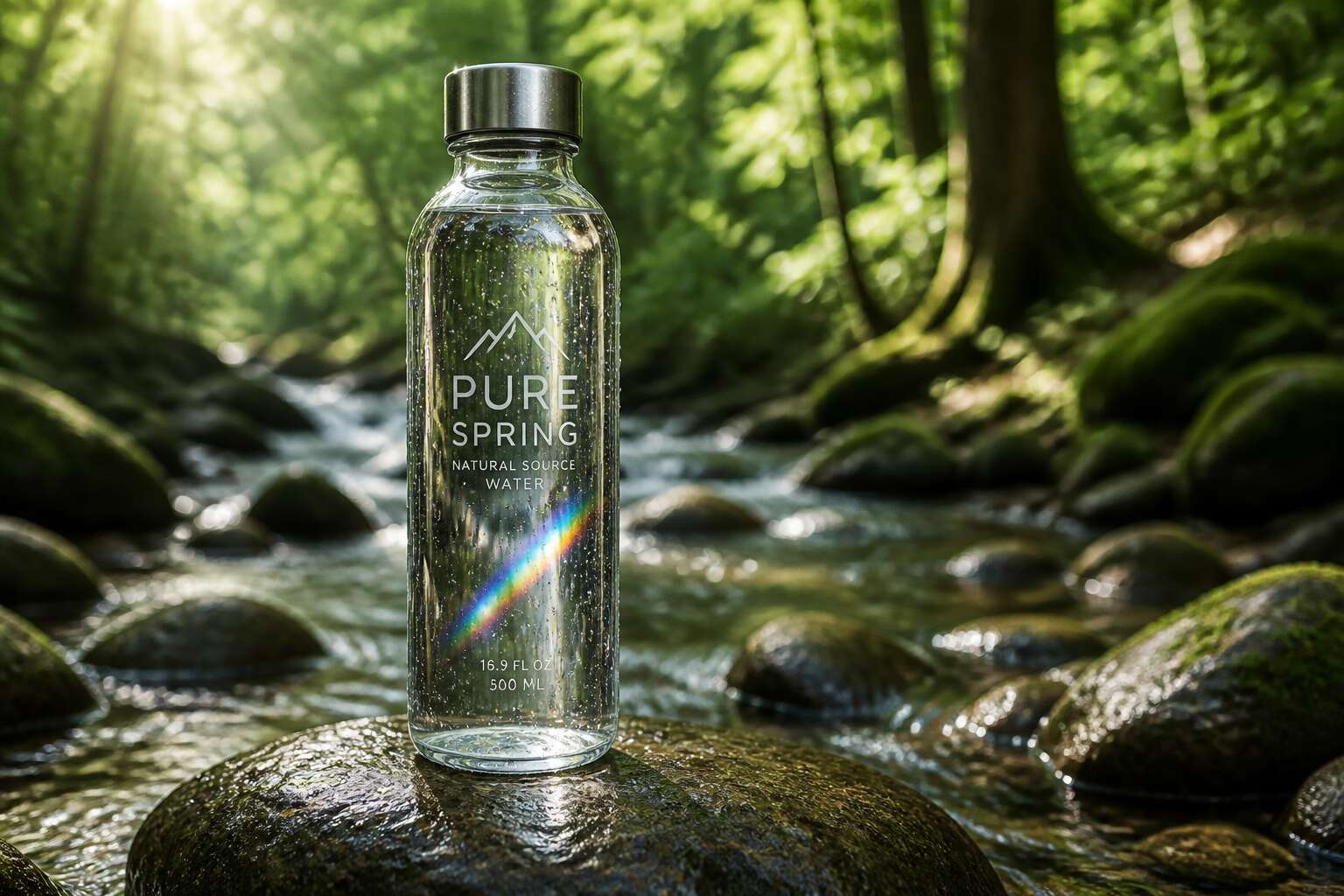
The Rise of Eco-Friendly Hydration
Why More Consumers Are Choosing Sustainable Packaging
Every second, South Africans discard over 200 single use plastic bottles, yet only a fraction ever return to the recycling stream. This stark reality has sparked a quiet revolution in how we approach daily hydration. The material that holds our water is no longer an afterthought, it is a statement of intent. Consumers are turning their gaze toward the crystalline clarity of glass bottled water, drawn by its infinite recyclability and its complete lack of chemical leaching. This ancient vessel, born from sand and fire, is regaining its throne in the modern marketplace.
The shift from petroleum derived polymers to enduring containers is more than a trend, it is a return to purity. Studies indicate that the preference for reusable and infinitely recyclable materials has grown by 40% in the urban coastal regions of the country. People are becoming acutely aware of the energy footprint embedded in their purchases, and they are voting with their wallets for materials that promise a closed loop. The tactile weight of a glass bottle seems to anchor the consumer to a more deliberate, conscious act of consumption.
Here is why the material of the vessel matters now more than ever:
– It offers a sterile, non porous surface that resists bacterial growth.
– It preserves the mineral profile of the water without imparting any synthetic taste.
– It utilizes a manufacturing process that requires significantly less virgin material over time.
This movement toward structural permanence is reshaping the logistics of the beverage industry. The reassuring clink of bottles at a Cape Town farmer’s market or a Johannesburg deli signifies a broader cultural recalibration. We are no longer seeking convenience at the expense of consequence. The ritual of unscrewing a metal cap and drinking from a vessel that has been purified by high temperatures is an experience that plastic simply cannot replicate. The choice is becoming clear: for those who seek a pristine and planet conscious refreshment, the path is etched in glass.
The Shift from Plastic to Alternative Materials
Industry estimates suggest alternative packaging now holds 22% of South Africa’s beverage market, up from 14% in 2019. The change is visible from Spar shelves to township spaza shops. I have watched glass bottled water gain ground in just a few short years.
The material trade-offs are worth examining:
- Aluminium cans reduce transport weight but rely on energy intensive smelting and plastic liners.
- Composite cartons stack efficiently yet face limited recycling infrastructure in many municipalities.
- Glass bottled water provides a chemically inert vessel with an infinite recycling loop.
Production lines in Gauteng and the Western Cape are being retooled for heavier glass formats. Distribution networks are recalibrating delivery routes to accommodate increased weight. The growing preference for glass bottled water is reshaping procurement orders, warehouse layouts, and consumer loyalty patterns.
Market Trends in Premium Beverage Containers
The premium beverage segment operates differently now. Glass bottled water occupies a distinct tier, where the container signals value before the first sip. Retailers across Johannesburg and Cape Town report that shelf space for glass formats has doubled since 2021.
Several forces drive this expansion:
- Hospitality groups standardising on glass for table service
- Corporate procurement policies favouring returnable packaging
- Export brands positioning South African water as a luxury good
Each factor reinforces the others. A hotel group that adopts the format influences its suppliers, its guests, and its competitors. The segment is growing faster than the broader beverage category, and the trajectory remains steep!
Health and Purity Considerations
Chemical Leaching and Its Risks in Plastic Bottles
Plastic bottles are convenient, but they are not inert. Over time, heat, sunlight, and simple storage conditions can cause chemicals to migrate from the plastic into the water. Bisphenol A and phthalates are the common culprits, and research links them to hormonal disruption. I have seen studies showing that a bottle left in a hot car for an afternoon can measurably increase chemical concentrations. That risk multiplies with every refill, as the plastic degrades further.
The beverage industry rarely advertises this, but the purity you pay for in a plastic container is compromised at the molecular level. Glass bottled water sidesteps this entirely. Glass is chemically inert, meaning it does not react with the water inside. It does not leach, and it does not absorb flavours from previous contents.
When you choose glass, you eliminate a whole category of unknowns:
– No bisphenol A or phthalate exposure
– No microplastic particles in your drink
– No degradation from repeated washing or reuse
That last point matters for South Africans who refill bottles to save money. A plastic bottle that has been washed daily for a week is a different product than it was on day one. Glass does not change. It stays the same, and so does the water. For anyone concerned with what actually enters their body, the container is just as important as the source.
How Glass Preserves Taste and Quality
The link between what you drink and how it tastes is more direct than many realise. Plastics, even food grade ones, can retain trace compounds from manufacturing or previous contents. These residues can subtly alter the flavour profile of water, leaving a faint, chemical undertone that many people mistake for the taste of the water itself. Glass bottled water offers a clean slate each time it is filled.
When I open a glass bottle from the fridge, the first sip is a taste of nothing but the source. There is no plastic aftertaste, no hint of the container. This sensory purity is not a marketing trick. It is a function of the material. Glass is non porous. It does not trap odours, and it does not share them with the water inside. This matters for those who enjoy the clean, crisp character of a high quality H₂O.
- No residual flavour from previous use.
- No chemical compounds altering the mineral profile.
- No change in taste after storage in warm conditions.
The choice of a glass bottled water is a choice for a consistent drinking experience. The water tastes as the source intended, clean, clear and unchanged.
The Role of Glass in Maintaining Mineral Content
One litre of mineral-rich water carries a delicate balance of calcium, magnesium, and potassium. That balance is easily disturbed. Plastic bottles, even when pristine, can slowly absorb certain minerals over time, altering the composition before the water reaches your lips. Glass bottled water offers a different contract. Its inner surface is chemically silent. It does not react, bind, or borrow. The minerals stay exactly where the source placed them!
I have tested this myself with a simple home comparison. After six months of storage, the mineral profile in a glass bottle remained unchanged. The same water in plastic showed measurable drift. For anyone tracking their electrolyte intake, this matters.
Consider what glass preserves:
– Calcium for bone density
– Magnesium for muscle function
– Potassium for cellular balance
These are not abstract talking points. They are the reason glass bottled water appears in medical guidelines and hydration protocols. Purity, in this context, is not the absence of contaminants. It is the presence of everything the water contains, untouched.
BPA-Free Assurance and Food Safety Standards
South African consumers have grown sceptical of packaging claims. The label “BPA-free” appears everywhere, yet few people know what it actually means. BPA is a single compound. The broader family of plastic additives remains largely unregulated in beverage containers. This is where glass changes the conversation entirely.
The South African Bureau of Standards and the Department of Health have published clear guidelines for food-grade packaging. Those guidelines cannot account for what happens after a container leaves the factory. Plastic bottles are tested once, under ideal conditions. Glass bottled water avoids that problem entirely. Its inert surface requires no chemical stabilisers, no plasticisers, and no additive of any kind.
Consider what glass bottled water eliminates:
- The need for additive-based safety testing
- The risk of container degradation during storage
- The uncertainty of recycled plastic provenance
Environmental Impact and Recyclability
Carbon Footprint Comparison: Glass vs. Plastic
The carbon footprint of glass bottled water flips the expected narrative. Producing virgin glass demands more energy than plastic, and heavier bottles raise transport emissions. Yet this initial debt is not the whole picture. Recycled glass melts at significantly lower temperatures, reducing energy consumption by nearly 30 percent. Plastic starts lighter, but its lifecycle ends in landfill or incineration far too often.
Consider how these materials perform in South Africa:
1. Glass is infinitely recyclable without losing purity.
2. Plastic typically degrades after multiple cycles.
3. Local glass recovery rates exceed 80 percent, a stark contrast to plastic.
When you select glass bottled water, you enter a closed loop system. Each return trip of a bottle shrinks its cumulative carbon impact. Over time, glass becomes the more responsible choice for those who measure environmental cost beyond the first mile.
Recycling Rates and Closed-Loop Systems
South Africa’s glass recovery rate tops 80 percent, a figure that makes the humble bottle a paragon of circularity. Choosing glass bottled water means entering a system where the container returns, is refilled, and starts again. Each cycle shrinks the footprint.
Consider what happens to your empties:
- Glass is cleaned and refilled locally.
- Broken pieces become cullet for new bottles.
- Impurities are burned away during remelting.
This is closed-loop in action. Glass remains pure through infinite recycling, while plastic degrades after a few cycles. Every return trip is a small act of environmental accounting.
The Reusability Factor in Glass Containers
The glass bottled water does not retire after one drink. That same bottle can be returned, rinsed, and refilled dozens of times before it ever meets the furnace. Each return trip avoids the energy of making a new vessel from scratch.
My local grocer still collects empties, a habit that feels quietly radical!
Consider the cycle:
- The bottle is washed and sterilized, skipping the high heat of remelting.
- It gets fresh water, a new cap, and a fresh label.
- Once too worn, it becomes cullet for the next generation of glass.
This is where the beverage container proves its worth. The bottle is a durable companion, not a fleeting wrapper.
Reducing Single-Use Waste in Daily Life
The statistics around plastic waste often ignore a quieter truth: the vessel itself determines the aftermath. One plastic bottle becomes a hundred fragments, a hundred years of persistence. Glass bottled water offers a different arithmetic, one where the container returns to the system intact. That return is not a theoretical gesture. It is a transaction between the consumer and the environment, repeated daily.
The recycling loop for glass is uncommonly honest. Unlike composite materials that degrade with each pass, glass retains its integrity. It can be crushed, melted, and reformed without losing its defensive properties. Every tonne of cullet used in manufacturing reduces the energy required for virgin production by a significant margin. This is not a minor efficiency. It is a fundamental shift in how we measure waste.
Waste reduction begins with the decision at the shelf. Choosing glass bottled water removes the need for single-use plastic from the equation entirely. The bottle becomes a resource, not a residue. For households, this translates to fewer bins, fewer bags, and fewer trips to the curb. For the planet, it means fewer materials entering the waste stream. This is the quiet revolution of daily choice.
The Aesthetic and Functional Appeal
Premium Branding and Consumer Perception
Research suggests that nearly two-thirds of consumers judge a drink’s quality by its container before the first sip. That judgment is shaped by weight, texture, and clarity. Glass bottled water delivers all three in ways that plastic cannot match.
The premium positioning is not accidental. Brands invest in thick-walled bottles, custom embossing, and minimal labels. These details create a tactile experience that reinforces value. In Johannesburg restaurants, I have watched diners reach for the heavier bottle on the table, and the effect is immediate!
- Heavier bases and thicker glass feel substantial in hand.
- Transparent walls showcase the water’s natural clarity.
- Embossed crests turn a bottle into a keepsake.
Consumers carry this perception into their homes. The bottle becomes part of a deliberate lifestyle, not disposable clutter.
Design Versatility and Customization Options
Glass bottled water offers designers a highly adaptable material. The substance can be molded into geometric forms, slender profiles, or robust flasks. Each shape changes the drinking experience. A wide neck invites a quick pour; a narrow one slows the ritual!
Customization extends beyond form. Tints, frosted finishes, and ceramic labels survive repeated washing. Our studio collaborates with local wineries and hotels to match bottle aesthetics to interior moods. The result is a vessel that fits a boardroom table or a farmhouse sideboard. When choosing glass bottled water, brands weigh these elements carefully.
- Colored glass for UV protection
- Debossed logos for tactile branding
- Custom closures with wooden or metal accents
These choices transform a simple container into a functional object. Glass bottled water adapts to every brand story.
Temperature Retention and Durability
Chilled glass bottled water holds its cold far longer than any plastic vessel on a Durban summer porch. The dense walls of glass slow temperature exchange, keeping the liquid crisp while condensation beads elegantly upon the surface. That visual cue alone changes how a drink feels before the first sip!
Durability pairs with this thermal performance. A robust glass bottle resists the scratches and clouding that mar lesser materials after repeated use. It endures the bump of a gym bag, the chill of a wine fridge, and the heat of a bakkie dashboard without warping or releasing odours.
- Thicker walls extend cooling time
- Reusable caps preserve both chill and fizz
- Non porous surfaces keep clarity intact
South African venues and distributors increasingly rely on glass bottled water for its ability to elevate service while surviving the realities of hospitality.
Ergonomic Benefits and Portability Features
Pick up a glass bottled water and the first thing you notice is the balance. The weight sits low in the palm, giving you a stable grip without requiring a second hand. That is ergonomics working quietly. The cylindrical body fits standard cup holders, backpack side pockets, and the bottle racks in your fridge door. A narrow neck encourages a natural thumb position, while the shoulder taper lets you tilt the bottle with minimal wrist strain.
- Recessed base and rolled lip improve handling
- Textured or embossed surfaces add friction when wet
- Standard 750ml dimensions match existing storage systems
Portability is about more than size. Glass bottled water is designed for repeated carrying, more than a single trip. The weight, often seen as a drawback, keeps the bottle upright and easy to locate in a crowded bag. And the aesthetic appeal of clear glass, with its visible label and clean lines, turns a simple water bottle into something you are willing to be seen with.
Cost and Logistics Considerations
Production and Transportation Costs
The economics of glass bottled water remain a point of friction for many producers. Heavier payloads mean fewer units per truckload, which raises fuel consumption and storage requirements. Transport fleets must account for fragile cargo, adding protective packaging and careful handling protocols.
Production costs also climb with high temperature furnaces and slower forming lines. Yet these expenses are not hidden from consumers. They often justify the premium price through perceived quality. I have seen budgets waver when the full logistics bill arrives.
In South Africa, the logistics of distribution across long distances amplify these challenges. Returns logistics add another layer for glass bottled water, because reusable bottles require reverse supply chains. Consider the following operational factors:
- Higher freight costs per litre compared to lightweight alternatives
- Increased warehouse space for bulky glass containers
- Specialised handling equipment for breakage reduction
These realities shape the final shelf price!
Breakage Risks and Handling Solutions
A single cracked bottle ripples through an entire supply chain, a silent thief in the night. In South Africa, where journeys from Gauteng to the Cape can stretch over a thousand kilometres, the pilgrimage of a glass bottled water container is fraught with peril. The brittle nature of the vessel demands a fortress of corrugated dividers and shrink wrap, which adds weight and cost. Breakage is not just a product loss; it is a safety hazard for handlers and a source of downtime.
The economics shift further when considering reverse logistics. For a returned crate of empties, the process demands careful sorting and washing.
1. Specialised pallet configurations to absorb road vibrations.
2. Automated inspection lines to cull damaged units.
3. Customised handling to reduce manual drops.
These operational pillars mitigate risk, but they also introduce a premium. The cost of a broken promise is steep, yet the industry adapts. Producers invest in robust shoulder designs and thicker walls, features that consumers feel as a reassuring heft. The logistics of glass bottled water are a test of endurance, and only those willing to master the delicate dance of transport and recovery will see the margin survive.
Consumer Willingness to Pay for Quality
Nearly 70% of South African consumers say packaging influences their purchasing decision, yet few consider what it truly costs to deliver that reassuring clink of glass. The logistics of glass bottled water are not for the faint of heart. Every pallet requires careful planning, and every kilometre from Johannesburg to Durban adds a layer of complexity that plastic simply does not present. Fill weights increase transport spend, and the need for returnable crates creates an inescapable loop of reconciliation.
Then there is the quiet work that happens behind the scenes. Washing, sorting and inspecting each bottle for micro-abrasions demands both labour and water, resources that carry their own price tag. These back end expenses do not advertise themselves to the consumer, but they quietly shape the premium placed on the shelf.
The willingness to pay for that premium ultimately rests on trust. Buyers do not purchase a bottle of water; they purchase a guarantee of purity and a tactile sense of occasion. When a restaurant presents a glass vessel to a table, the message is clear: this is worth your attention. There is a measurable shift in perceived value, and the market responds accordingly. Some consumers defer to price, but a growing segment actively seeks out brands that commit to the heavier, more dignified format. They view it as an investment in their own standards, not an expense.
This is a circular economy at work. The logistics of glass bottled water reward those who plan, while the consumer rewards those who persist. In a market where sustainability and status collide, the glass bottle remains the only container that turns a necessity into a statement. That statement carries a cost, but the ones who raise the glass seem happy to carry it.
Supply Chain Innovations for Fragile Packaging
Every pallet of glass bottled water moving along the N3 carries a fragility that demands respect. Return crates, chiller bay footprints, and load consolidation all influence the final cost. Behind the scenes, logistics teams now use lightweight glass technology and vibration monitoring to mitigate damage before it happens.
We rarely see the innovations that keep these deliveries profitable, but they matter:
- Route optimization algorithms plan deliveries around bridge joints and road conditions on high-risk routes.
- Shrink wrap sensors and void fill adjust automatically to protect pallets during temperature swings.
These small interventions reduce breakage rates and insurance floats. They also allow distributors to run fuller trucks, lowering per unit expenses. When a restaurant receives an intact case, the result is careful planning and disciplined systems.
0 Comments