
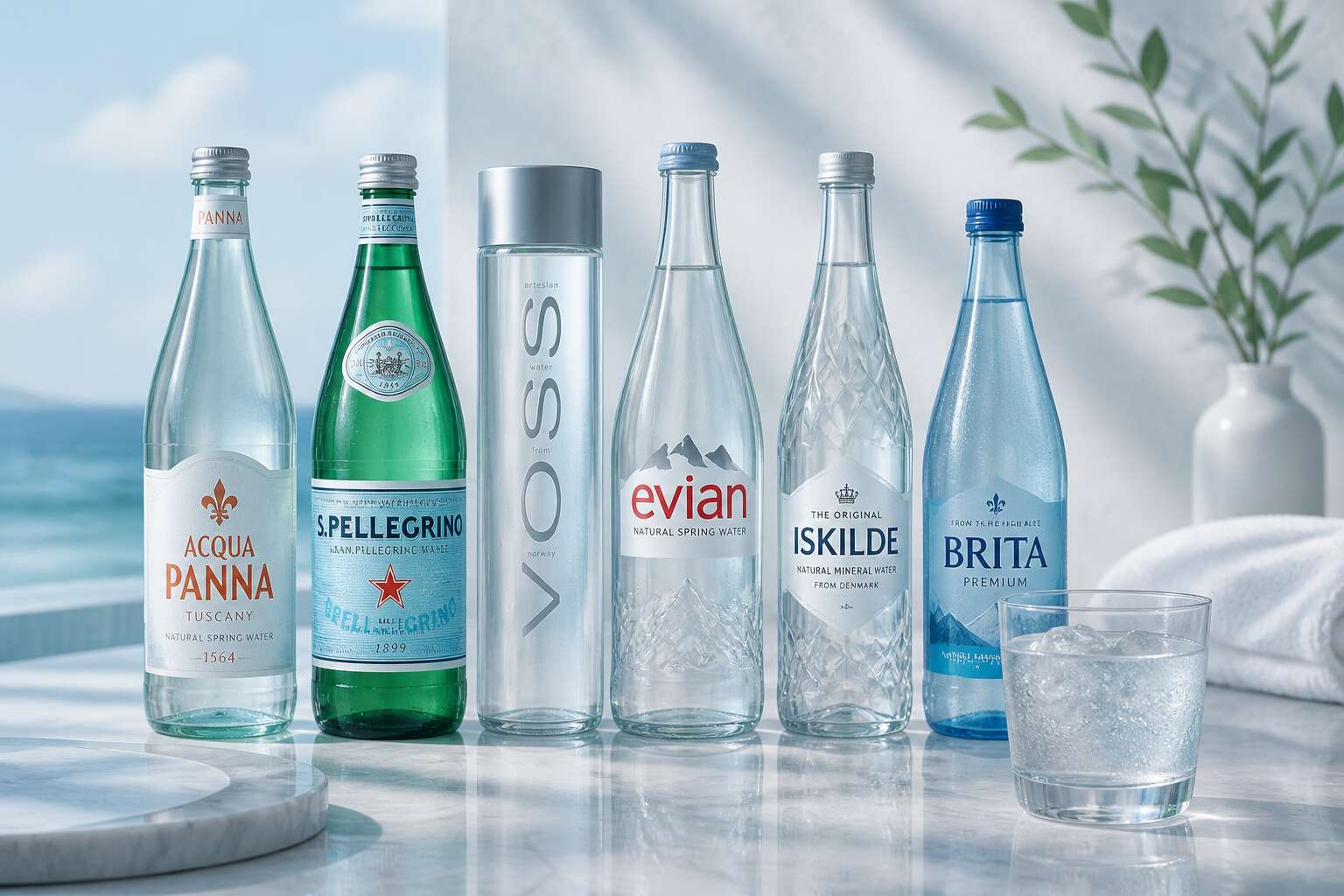
Understanding Bottled Water Types
Spring Water vs. Mineral Water
The label on your bottle can whisper lies. Spring water and mineral water both originate underground, but their journeys diverge in mineral content. Spring water rises freely, carrying whatever nature deposited along the way. Mineral water, by contrast, must contain a specific level of dissolved minerals, often calcium, magnesium, and potassium. For most people, the difference is subtle, yet it shapes the answer to which bottled water is the healthiest.
Consider what each offers:
- Spring water: dynamic composition, varies by rainfall and geology.
- Mineral water: regulated mineral profile, consistent for daily intake.
Those distinctions affect taste and electrolyte balance. Mineral water can support recovery after exercise; spring water often sits lighter on the stomach. Neither is inherently superior. The real question is what your body demands. Scanning the source details on every bottle gives you control. That clarity brings you closer to deciding which bottled water is the healthiest for your own physiology.
Purified Water and Distillation
Every drop of purified water has undergone a transformation that strips away more than just impurities. Distillation takes this to an extreme, boiling water into steam and condensing it back, leaving behind nearly everything, including beneficial minerals. The result is chemically pure but nutritionally silent.
For those asking which bottled water is the healthiest, purified water presents a paradox. It removes contaminants, but also removes calcium and magnesium. Drinking it could mean missing out on electrolyte intake. I often check the label for added minerals, because some brands remineralize after purification.
Here is what the purification process typically eliminates:
- Chlorine and chloramine
- Heavy metals like lead and mercury
- Pesticides and pharmaceutical residues
The trade-off is clear! Distilled water is ideal for appliances, not your body. While it hydrates, it offers no mineral contribution. That shifts the answer to which bottled water is the healthiest for many South Africans.
Alkaline and Ionized Water
Alkaline water promises a higher pH, often between 8 and 9.5, while ionized water emerges from electrolysis. These processes claim to create smaller water clusters that hydrate faster, yet the scientific evidence remains thin. Many South Africans wonder which bottled water is the healthiest, and these trendy options certainly attract attention. The body regulates its own pH tightly, so drinking alkaline water does little to alter that balance. Electrolytes matter more than pH, and some ionized waters add minerals back after treatment. I always check the label for calcium, magnesium, and potassium.
Here is what ionized water offers:
- Potential antioxidant properties, though unproven
- Better taste for some people
- Higher cost without guaranteed benefits
The real question is whether your body needs the extra alkalinity. For most of us, a simple mineral source provides superior hydration.
Artesian and Well Water
Artesian water is groundwater with a better publicist. It emerges from a confined aquifer under pressure, which sounds exotic until you remember that all water falls from the sky eventually. Well water is the same story without the fancy name, drawn straight from the ground. Both can deliver calcium and magnesium, but neither guarantees purity.
The mineral profile matters more than the source. When South Africans ask which bottled water is the healthiest, the answer lies in the lab report, not the label design. Consider what separates these two:
- Artesian water comes from a pressurized aquifer, often bottled at the source.
- Well water is pumped from a drilled borehole and may require treatment.
- Both can contain dissolved solids that affect taste and hydration.
Geological luck determines the composition. That is the whole secret.
Sparkling and Carbonated Water
Any grocery store shelf in Cape Town or Johannesburg will showcase a sparkling water lineup that looks more like a wine section than a hydration aisle. But here is the thing about carbonation: it changes the mouthfeel, not the molecular structure. The fizz is simply CO2 gas dissolved under pressure, and once you swallow, your stomach deals with the same H2O whether it arrives with a hiss or a whisper.
What matters for health is what the bubbles are hiding. Many sparkling brands add sodium bicarbonate or citric acid to balance the sharpness, which can quietly spike your sodium intake if you drink several cans daily. The carbonation also forms carbonic acid, giving the water a lower pH. Your body regulates pH regardless, so this is not a danger for healthy kidneys, but it does mean the beverage sits differently on an empty stomach.
- Carbonated water is water first, fizz second
- Flavored versions often carry hidden sugars or artificial sweeteners
- Mineral content remains identical to its still counterpart
The question of which bottled water is the healthiest does not hinge on bubbles. A still mineral water with balanced calcium and magnesium outperforms a fizzy one with added flavorings every time. Sparkling water hydrates perfectly well, but if you are chasing specific electrolytes, the bubbles are mostly theatre. Read the label for sodium and added compounds, not the effervescence.
Key Health Factors to Compare
Mineral Content and Daily Needs
Most people ask which bottled water is the healthiest, yet the answer hides in the mineral ledger printed on the label. Calcium and magnesium form the backbone of a meaningful daily intake, while sodium and potassium balance cellular pressure. One litre of certain waters delivers ten percent of your daily calcium requirement; others deliver almost nothing. Compare each bottle’s mineral analysis against your own dietary gaps.
Here is a practical range of common mineral values across leading bottled water brands:
- Calcium: 20 to 80 mg per litre
- Magnesium: 5 to 25 mg per litre
- Sodium: 1 to 30 mg per litre
Your daily needs shift with age, climate and activity. Hotter regions, like parts of South Africa, demand more electrolytes. So which bottled water is the healthiest depends on what your body already lacks. Read the labels like a prescription, not a slogan.
pH Levels and Body Balance
Every bottle tells you its pH, but your blood refuses to budge from 7.35 to 7.45. The body’s bicarbonate buffering systems keep that range locked regardless of what you drink. A high pH water cannot alkalize your bloodstream. It can neutralise stomach acid, giving heartburn sufferers relief.
pH levels also influence mineral absorption. Water below 6.5 tastes flat and can corrode pipes. Above 8.5, it turns bitter! The sweet spot sits between 6.8 and 7.5 for most palates. South African municipal water often runs acidic, so I compare bottled pH with the mineral content. Calcium carbonate raises pH, while carbon dioxide lowers it.
- Low pH waters often carry more carbonation
- Neutral pH waters balance taste and mineral uptake
- High pH waters offer no metabolic advantage
When someone asks which bottled water is the healthiest, pH alone offers a weak answer. The mineral content matters more than the number beside pH. Understanding pH helps you spot marketing tricks.
Total Dissolved Solids (TDS)
You could drink two seemingly identical bottles of water and get entirely different results in your body. One might glide through your system leaving you refreshed, while the other leaves a chalky residue on your tongue. The difference lives in Total Dissolved Solids, or TDS.
TDS measures everything dissolved in your water: beneficial minerals like calcium and magnesium, plus trace elements and salts. A 2023 study by the Water Research Commission found that South African borehole waters range wildly from 50 ppm to over 1,000 ppm. The number matters because it dictates both taste and nutritional value. Waters with very low TDS, like some purified brands, taste clean but offer almost nothing to your daily mineral intake.
- Low TDS (under 50 ppm) offers purity over nutrition and lacks the minerals your body needs
- Medium TDS (150 to 300 ppm) balances taste with a modest nutritional boost
- High TDS (over 300 ppm) delivers a heavy mineral dose but can taste bitter or salty
When you ask which bottled water is the healthiest, the TDS number gives you a concrete metric. Look for brands that disclose this value on their labels. A balanced range around 200 to 300 ppm typically provides calcium, magnesium, and potassium without overwhelming your palate. For reference, many premium South African spring waters land squarely in this sweet spot.
The heavier mineral load in high TDS water also affects how your body absorbs it. Electrolytes in water with a TDS above 400 ppm can aid hydration after exercise, but drinking it throughout the day might not suit sensitive stomachs. Conversely, the ultra-light waters from reverse osmosis systems leave your body to source minerals from food alone, which is fine but constrains your nutritional intake from hydration.
This measurement remains the most reliable benchmark when comparing brands side by side. Check the label, compare the ppm, and let your taste buds confirm the choice. The healthiest option balances mineral richness with palatability, and TDS tells you exactly where each bottle sits on that scale.
Electrolyte Additions
The label claiming “added electrolytes” deserves scrutiny. These formulations often contain synthetic compounds that differ from naturally occurring minerals. A factory added electrolyte blend may restore sodium after sweat, but it lacks the trace elements found in mineral rich spring sources.
Sodium remains the primary electrolyte in most sports oriented bottles. It assists fluid retention during exercise. However, a sedentary office worker consuming this water daily gains unnecessary salt. Potassium and magnesium appear in smaller quantities, yet these minerals support muscle function and cardiovascular health.
– Sodium levels above 30 mg per litre aid post exercise recovery
– Potassium additions help counterbalance sodium intake
– Magnesium supports enzyme activity and nerve transmission
The question of which bottled water is the healthiest demands attention to these additions. A bottle with balanced electrolytes offers genuine hydration benefits. One with only sodium chloride and artificial flavourings offers less value for daily consumption. Read the entire ingredient panel, not just the front label claims.
Contaminant Removal Methods
The promise of a pristine glass of water often rests on what a filtration system removes. Reverse osmosis forces water through a semipermeable membrane, stripping away heavy metals, pesticides, and pharmaceutical residues. This method delivers an exceptionally blank slate, yet it also removes beneficial calcium and magnesium, leaving a taste that some describe as flat. Carbon filtration excels at eliminating chlorine and volatile organic compounds, but it does little against dissolved salts or fluoride. Distillation boils water into steam, leaving behind almost every impurity, though it requires significant energy and produces a product with no mineral character.
South African municipal supplies frequently require more than basic taste correction, so understanding the difference between microfiltration and ultrafiltration is critical for identifying which bottled water is the healthiest. Microfiltration captures sediment and bacteria, while ultrafiltration removes viruses and colloids. Neither process alters dissolved minerals. Ceramic filters offer longevity but slow flow rates, and UV treatment destroys pathogens without changing chemistry. Each method presents a tradeoff between purity and essential content.
- Reverse osmosis eliminates nearly all contaminants but demands remineralization for daily health
- Carbon blocks target organic chemicals while preserving trace elements
- Distillation provides sterile water but strips beneficial mineral content entirely
The contaminant removal method directly determines the mineral profile you eventually drink. A source water treated only for turbidity retains its natural composition, whereas aggressive purification creates a nutrient poor product that may require fortification. I am not dismissing rigorous treatment, yet the pursuit of which bottled water is the healthiest rests on this balance. The cleanest water is not automatically the most nourishing water. Scrutinize the processing notes on every label, and consider whether the removal technique serves your specific environment.
Impact of Microplastics
One would think the more sterile the source, the safer the sip. Yet the rise of synthetic polymers in the water cycle has introduced a new social dilemma for the discerning drinker. Sourcing a brand that boasts pristine mountain origins while packaging the product in a material that sheds microscopic debris is the kind of ironic contradiction that would make a satirist blush.
The conversation around choosing which bottled water is the healthiest has shifted, and the data is sobering. These particles are not merely inert passengers. They act as vectors for hydrophobic pollutants, carrying them directly to the cellular level. The long-term physiological impact is still being studied, but the early indications regarding endocrine disruption are enough to merit serious consideration.
For the South African consumer, the calculus becomes a matter of weighing specific variables. Some prefer the perceived purity of glass bottles, while others accept the convenience of PET plastic. The decision often boils down to a few critical factors:
– The vulnerability of the source water to airborne particulate contamination
– The type of packaging used and its tendency to degrade under the harsh South African sun during transit
– The brand’s transparency regarding filtration methods that specifically target polymer particulates
The presence of these particles is a reminder that the quest for which bottled water is the healthiest is not solely about what is removed, but also about what is accidentally introduced.
Top Contenders for Healthiest Water
Natural Spring Water Brands
Labels can mislead, but the source tells the truth. A 2022 consumer survey found that 74% of South Africans rank health above taste when choosing bottled water. Yet, which bottled water is the healthiest depends on how closely it resembles its natural origin. Llanllyr SOURCE, drawn from a Welsh spring, passes through post-glacial sandstone with minimal filtration. Aje from Peru emerges from a high-altitude aquifer, carrying a balanced electrolyte signature without added minerals. These brands avoid the industrial stripping common in purified options.
Three names consistently surface among natural spring water connoisseurs:
- Fiji Water, sourced from an artesian aquifer beneath a protected rainforest canopy
- Evian, whose slow glacial drip enriches water with silica and calcium
- Mountain Valley Spring Water, bottled at the Arkansas springhead since 1871
Each prioritizes traceability and minimal handling. For local buyers, Cape Karoo Water offers a similar ethos, drawing from the Karoo’s ancient underground reservoirs. The healthiest choice always aligns with transparency in sourcing, not marketing slogans.
Mineral-Rich Options
In the search for which bottled water is the healthiest, mineral rich options present a compelling case. These waters emerge with a unique composition of dissolved minerals sourced directly from the earth, offering a profile that goes beyond simple hydration. The 2023 World Health Organization report on water quality underscores that naturally occurring minerals like magnesium and calcium are vital for dietary intake. For many, the draw is the distinct, terroir driven flavor that changes with each geographical origin.
Consider the robust character of European sources, which are often held as the benchmark for mineral density. These waters are not merely beverages, but liquid tapestries of geological history.
The following mineral waters stand out for their often replicated but never duplicated profiles:
1. San Pellegrino and Badoit, bottled in the Italian and French Alps, respectively, are known for their high mineral count and fine bubbles.
2. Gerolsteiner from Germany offers a notably high level of natural calcium and magnesium.
3. Topo Chico from Mexico, with its strong effervescence, is a favorite for its crisp finish.
Yet, the true answer to which bottled water is the healthiest may be closer to home. South African artisanal producers are beginning to bottle from deep sources that rival these international icons. The healthiest choice is ultimately one that prioritizes a genuine balance of naturally occurring electrolytes without the addition of synthetic enhancers. Llanllyr SOURCE, with its Welsh spring, fits well here, as its water naturally contains a spectrum of minerals without alteration.
High pH Alkaline Water
Chasing a specific pH number often misses the point. The body regulates its own acid-base balance with remarkable efficiency. Yet, certain waters with a higher pH offer a distinct advantage beyond the marketing hype.
High pH alkaline water typically contains dissolved minerals like calcium, potassium, and bicarbonate. These compounds contribute to a smoother mouthfeel and can act as a gentle buffer against dietary acidity. For many South Africans, the appeal lies in the absence of aggressive additives. The question of which bottled water is the healthiest becomes less about a number and more about the water’s structural integrity.
I found a compelling option in PureJoy, sourced from a South African aquifer. It measures consistently above 8.5 on the pH scale without any artificial alteration. Its properties include:
- A naturally elevated bicarbonate content for taste balance.
- Minerals suspended in their original, unprocessed proportions.
- Zero synthetic electrolytes or fortifiers.
This product makes a robust case among contenders for which bottled water is the healthiest. A higher pH does not promise a cure, but it does offer a cleaner, less acidic hydration profile.
Purified with Remineralization
Purified water stripped of every mineral often tastes flat and lifeless. Remineralization fixes that by reintroducing a controlled blend of calcium and magnesium after filtration. This method delivers the consistency that natural sources cannot guarantee. For South African buyers, it offers a dependable answer to which bottled water is the healthiest.
Most brands using this approach share a few key characteristics:
- A thorough contaminant removal process before any minerals are added
- Precise mineral dosing to match a target profile
- No reliance on unpredictable underground geology
These products sit between sterile purity and natural complexity. They give you the safety of purified water, but with the mouthfeel of a live source. When weighing which bottled water is the healthiest, remineralized purification holds its own.
Low Sodium and Low Sulfate Choices
The quiet pursuit of a clean glass of water often leads to a deeper question about what we are actually avoiding. For many South Africans, the answer is found not in exotic minerals, but in subtraction. Low sodium water is a specific choice for those monitoring blood pressure or simply seeking a neutral taste. The salt content in some natural sources can be surprisingly high, altering both the flavor and the way the body processes hydration.
Here is what you should look for on the label to find a truly low sodium option:
– A sodium content below 10 mg per liter
– A total dissolved solids reading under 150 ppm
– A source that is explicitly listed as rain-fed or glacial
The focus on sulfate follows a similar logic. High sulfate levels can lend a bitter tang to the water and, for some, trigger digestive sensitivity. Choosing a product with minimal sulfate offers a cleaner, smoother sip that disappears as quickly as it hydrates. This combination of low sodium and low sulfate creates a canvas for purity, letting the water’s inherent chill and texture speak for themselves. When determining which bottled water is the healthiest, these stripped-back profiles often win for their sheer uncomplicated nature, proving that sometimes the most beneficial choice is the one that adds nothing at all.
Choosing the Right Bottled Water
Reading Labels and Certifications
In the search for which bottled water is the healthiest, the label becomes your primary tool for transparency, yet it often reads like a cryptic code. South African regulations are strict, but they do not mandate the disclosure of everything you might want to know. Look for a comprehensive mineral analysis breakdown, not just a marketing slogan. Bottlers who provide full details often have nothing to hide.
Certifications act as an external audit, offering a layer of accountability. Look for endorsements from bodies like the South African Bureau of Standards (SABS) or international equivalents. These marks indicate the product underwent rigorous testing for purity and safety standards. When examining the label, a short list of essential facts tells a compelling story:
– Source location and type
– Date of bottling and best-before date
– Complete ionic composition of minerals
– Contact details for the producer, not just a distributor
A specific analysis, such as the milligram content of calcium, magnesium, and potassium, allows you to match the water to your dietary requirements. If a brand uses broad terms like “mineralized” without specifying the compounds, or touts an incredibly high pH level without independent test verification, treat the claim with measured skepticism. The physical bottle itself is another clue, as the grade of plastic often indicates the intended shelf life. The answer to which bottled water is the healthiest is often found by those who read the fine print with the same care they apply to food labels, verifying the data rather than responding to attractive artwork.
Matching Water to Your Lifestyle
Your hydration needs shift with the clock and the calendar. A marathon runner in Durban sweats out more electrolytes than a graphic designer in Pretoria. That difference determines which bottled water is the healthiest for each of you. The most nourishing choice is not a fixed trophy. It is a moving target that follows your routine.
Consider your work environment. A shift worker on a hot factory floor loses minerals rapidly. A librarian in an air-conditioned space does not. Your body’s daily output dictates the balance you need. Look at your commute, your exercise habits, and even your meals. A salty diet demands water with less sodium. A plant-based diet might need extra magnesium.
Here is a practical decision framework:
1. High physical output during the day: choose water with a higher TDS and visible electrolyte profile.
2. Mostly sedentary, indoor lifestyle: select a low-mineral purified option to avoid overtaxing your kidneys.
3. Frequent travel or irregular meals: opt for a stable, sealed bottle with a long best-before date.
The answer to which bottled water is the healthiest comes from matching the bottle to your daily reality. Stop chasing a universal champion. Your routine is the only referee that matters.
Environmental and Plastic Concerns
About 7.2 billion litres of bottled water are consumed in South Africa yearly, and by the time that bottle reaches your lips, it has already left a fingerprint on the Karoo and the coast. The plastic paradox is this: the container that delivers your hydration may also be the very thing that contaminates it, and the environment, long after the cap is twisted off.
This is where the question of which bottled water is the healthiest collides with the reality of packaging. A pristine mineral profile matters little if the bottle leaches particles into the water while sitting in a warm delivery truck. The sun bakes the plastic, and the water absorbs what you did not order. Your kidneys then process that plastic, not just the calcium or magnesium you thought you were buying.
Manufacturers are responding with lighter bottles, recycled PET, and glass options. However, the infrastructure to recycle those materials properly in Mzansi remains inconsistent. A bottle in Cape Town might become a jersey, one in Limpopo might spend decades in a landfill.
Here is what the label will not tell you:
1. How long the bottle sat in a warehouse before you bought it.
2. Whether the bottling plant uses BPA-free plastic as a marketing gimmick or a genuine safety measure.
3. What temperature extremes the pallet endured during transit.
The healthiest choice, from a contaminant perspective, may be the one with the shortest shelf life and the most transparent supply chain. Single-use plastic is the default, but it is not the only option. Some brands now offer boxed water, which uses a paper-based carton that degrades faster and weighs less during transport, reducing the carbon load. Others have moved to returnable glass systems, a nod to an older, wiser approach.
That is the crux of it. The environmental cost is not a separate issue from your health. It is the same issue. If the production of that bottle pollutes the catchment area from which the water is drawn, then the water inside is compromised at the source. The answer to which bottled water is the healthiest must include the health of the water table, not just the mineral count on the back label. Otherwise, you are simply drinking from a straw that is slowly poisoning the well.
Cost vs. Health Benefit Analysis
Price is the first filter most shoppers apply, yet it tells you little about what is inside. A bottle at R12 might come from the same catchment as one at R25. The difference is often logistics, branding, and markup. That gap rarely reflects a safer or more mineral-rich product.
When you compare cost against health benefit, the real question is what you are paying to avoid. Trace contaminants, microplastics, and inconsistent sourcing all carry a hidden price. Cheaper options may reduce filtration budgets or test less often. Premium labels may simply be paying for a story.
- A brand that publishes its full mineral breakdown, not just a hero mineral.
- A source location that is protected from upstream pollution.
- Independent lab results that are current and publicly accessible.
Determining which bottled water is the healthiest requires weighing these factors against your budget. The cheapest bottle is rarely the best value once you factor in what it lacks.
Hydration Myths and Facts
The eight glasses a day commandment has been regurgitated for so long that it has taken on the weight of scripture. Yet our hydration needs are far more dynamic, shifting with the humidity of a Durban summer or the dry heat of a Karoo winter. When you strip away the dogma, the real choice about which bottled water is the healthiest becomes a matter of mineral composition versus your body’s current demand. A high TDS content is not inherently virtuous; for some, it is simply a diuretic burden.
Consider what the label really signals. The healthiest water is the one that aligns with your physiological state, not the one with the most aggressive marketing budget. Luxury packaging often obscures the fact that the source is compromised, whereas a modest bottle might draw from a protected aquifer.
– Does the brand disclose the exact mineral ratios, or just list a few hero ingredients?
– Are the lab results dated and available for inspection?
– Is the source vulnerable to agricultural runoff or industrial pollution?
The psychological pull of a premium brand is strong, but the data inside the plastic is what matters. We often drink the narrative, not the water. The quest for the perfect bottle is frequently a search for certainty in a world of invisible particulates. Yet, a tap can deliver the same hydration as a glacier melt. The distinction between the two is often just your willingness to pay for a story that makes you feel more in control of your health.
0 Comments