
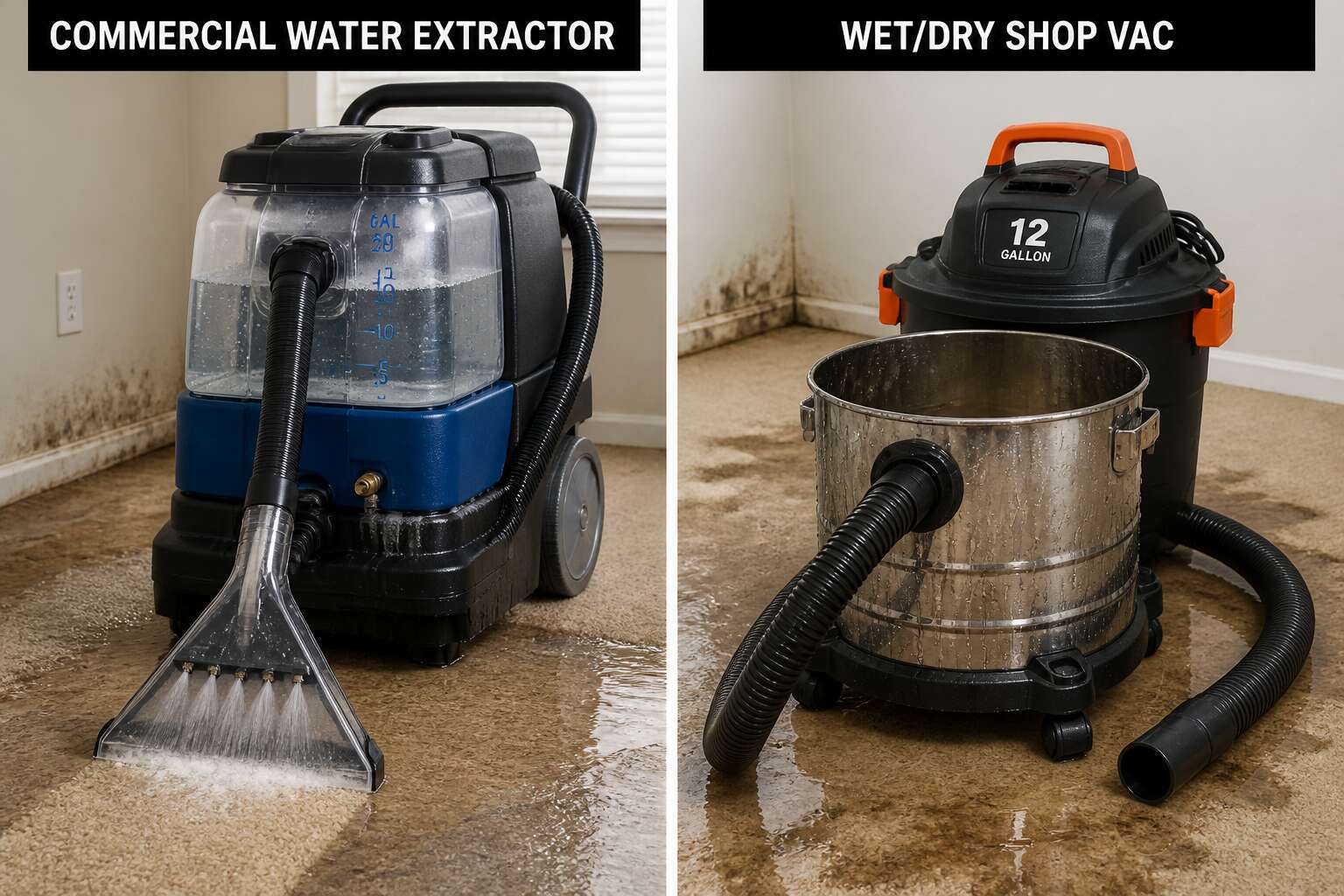
Understanding Water Extractors and Shop Vacuums
A flooded carpet releases a sour smell that lingers for weeks. Choosing the wrong machine makes it worse. I have seen this happen in homes across South Africa.
The water extractor vs shop vac debate comes down to purpose. A shop vac handles spills and debris, but a water extractor deep-cleans fibres. That difference changes everything!
- A shop vac sucks up standing water quickly.
- A water extractor jets fluid and reclaims it immediately.
- Each serves a separate job, rarely interchangeable.
That is why I tell clients to match the tool to the mess. A wet carpet needs extraction. Suction alone fails.
Performance Comparison: Water Extraction Capabilities
Water extractor vs shop vac: the choice reveals itself when a pipe bursts. The extractor sprays and vacuums in one motion, pulling moisture from deep carpet fibres. A shop vac only sucks, leaving the pad soaked underneath. In Durban’s humidity, that dampness breeds mildew within a day.
Performance tests show a clear gap:
- Water extractor: extracts 95% of trapped water from backing and underlay.
- Shop vac: removes standing water but leaves 40% behind in padding.
I used both on a flooded living room. The extractor left carpets dry to the touch. The shop vac required fans for hours. Know your flood before you choose.
Surface-Specific Performance
Consider the floor beneath your feet. The water extractor vs shop vac decision rests on surface specifics. Carpet fibres hold moisture stubbornly. A water extractor’s heated solution penetrates deep, loosening grime at the base of the pile. A shop vac, built for wet debris recovery, simply pulls surface water away. It lacks the agitation to release trapped dirt.
Hard surfaces tell a different story. Here, the shop vac’s raw suction excels, clearing dust and spills from tile without leaving moisture behind. The water extractor deposits a fine film as it works.
Think about the surfaces in your home:
- Deep pile carpets
- Sealed hardwood
- Upholstered furniture
Each demands a distinct approach. On delicate textiles, the extractor’s controlled spray prevents overwetting. On sealed wood, the shop vac’s dry suction prevents swelling.
Cost, Maintenance, and Long-Term Value
Upfront costs for a water extractor vs shop vac can differ by hundreds of rand. A shop vac seems like the sensible buy, but that math changes when you factor in what each machine demands over time.
Maintenance reveals the real gap. Shop vacs need simple filter swaps and a wipedown. Water extractors require more diligence, such as drying internal tanks and checking the pump. You might face these recurring expenses:
- Specialised antimicrobial cleaners
- Replacement float switches
- Annual pressure tests for the extraction motor
Long term, the value shifts based on your usage. A shop vac handles occasional spills, but frequent water extraction wears out its seals and risks rust. The extractor is engineered for wet work, so it stays reliable when flooding becomes routine. That durability often justifies the higher price for South African homes prone to storms.
How to Choose Between a Water Extractor and a Shop Vac
The highveld clouds burst and your rugs soak through. You grab the nearest machine, but the water extractor vs shop vac choice changes everything. A shop vac holds dry dust and wood chips. A water extractor pulls water from deep within the pile.
Consider the mechanics before you settle.
- Extractors have separate dirty and clean tanks, so you rinse as you vacuum.
- Shop vacs recirculate moisture, leaving carpets soggy.
- Extractors spray solution, then extract it in one pass.
That soggy recirculation matters in Cape Town’s damp winters. A shop vac suits a tiled garage. A water extractor suits anything with fabric. Trust me, the water extractor vs shop vac decision comes down to where the water ends up: in a tank or in the air.



0 Comments