
Understanding the Belgian Water Supply Landscape
The Regulatory Framework Governing Water Services
Belgium’s water supply hides its secrets in plain sight. Beneath the cobbled streets and industrial canals lies a fragmented network, overseen by a regulatory framework shaped by the country’s linguistic divides. Wallonia, Flanders, and Brussels each hold separate authority, meaning the water supplier belgium experience changes drastically depending on your postal code!
The key oversight bodies:
- Flemish Environment Agency for the north
- Walloon Public Service for water management in the south
- Brussels Environment for the capital
These institutions enforce distinct quality standards and tariff structures. This decentralisation makes the water supplier belgium sector a study in contrasts, balancing local autonomy against the need for cohesive national policy.
Major Public and Private Water Suppliers
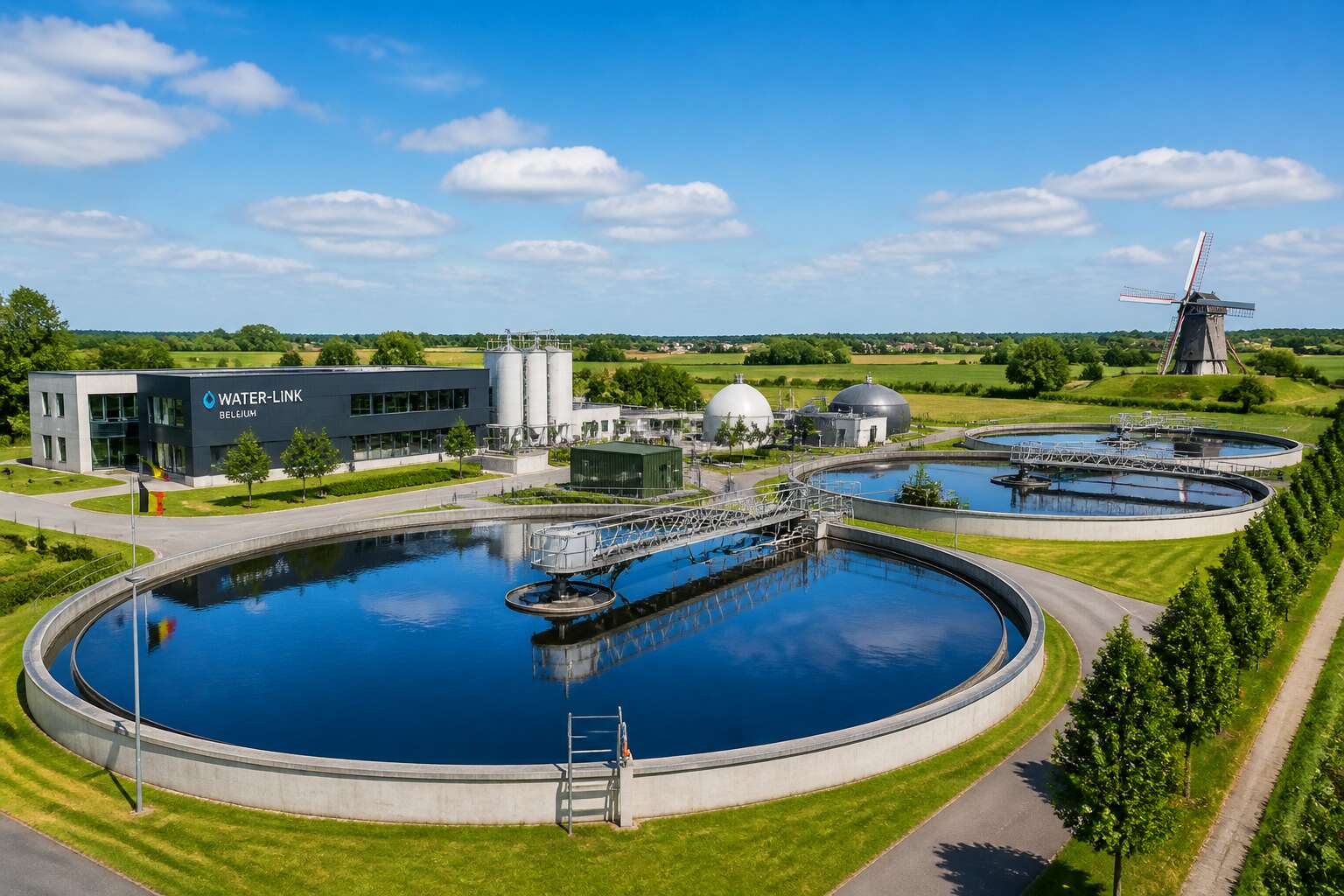
Pick a water supplier belgium and the landscape shifts remarkably! In Flanders, De Watergroep serves millions of households, while Water-link operates Antwerp’s urban network. Wallonia leans on SWDE, the dominant public operator, alongside local intercommunales such as CILE. Brussels depends on Vivaqua for production and distribution across the capital.
Private concessions exist but remain marginal; nearly every water supplier belgium carries public ownership at its core. Tariffs and quality standards deviate from one municipality to the next.
- De Watergroep: Flemish public leader
- SWDE: Walloon powerhouse
- Vivaqua: Brussels backbone
I find this patchwork oddly elegant. Your postal code determines not only your rate, but also your water’s chemical signature.
Primary Water Sources in the Country
Belgium’s drinking water emerges from a stark geological divide. Surface water, captured from rivers like the Meuse and the Scheldt, supplies the majority. The remainder comes from deep groundwater reserves. This split dictates the treatment complexity for every water supplier belgium operating in the country.
The primary sources fit into distinct local categories:
- Confined aquifers sealed beneath impermeable clay layers.
- Phreatic or unconfined zones that recharge directly from seasonal rainfall.
- Hilltop reservoirs feeding off runoff in the Ardennes highlands.
The water arriving at a tap in Brussels carries a chemical signature shaped by deep mineral contacts. I find this patchwork oddly elegant. Your postal code determines your rate and the exact mineral profile hitting your glass. That alchemy occurs underground, far from view!
Water Pricing and Tariff Structures
The price of a cubic metre of Belgian water changes with the postal code, and the difference is rarely small. In one town, you might pay for the privilege of connection; in another, the tariff hides the treatment costs entirely. Every water supplier belgium composes its own financial dirge from the same basic instruments.
Tariff structures break down into a few recurring parts:
- A fixed charge for the meter and its maintenance
- A volumetric rate that rises with consumption
- A sanitation surcharge for wastewater collection
- Local taxes added by the municipality
The interplay of these components creates a fragmented landscape where identical households receive wildly different bills. That variance has nothing to do with water quality, and everything to do with local infrastructure debt, geography, and political choice. I find that opaque arithmetic strangely honest.
How to Select a Water Provider in Belgium
Comparing Residential vs. Commercial Supply Options
Choosing a water supplier belgium hinges on how your consumption behaves. Residential users seldom see sudden peaks, while commercial sites might double their draw overnight. I have yet to meet a commercial buyer who ignores that contrast!
A household should prioritize billing simplicity and leak response. A factory, however, needs guaranteed pressure and emergency reserves. Your provider must match those expectations.
Consider these factors:
- Residential: scrutinize fixed fees and customer service channels.
- Commercial: evaluate supply continuity, capacity limits, and penalty clauses.
Both segments share a need for verified water quality, yet the operational demands diverge sharply. Knowing your own load profile remains the core differentiator.
Key Factors to Consider When Choosing a Supplier
Selecting a water supplier belgium is an exercise in patience, not impulse. The decision reflects your tolerance for uncertainty and your operational reality. Most buyers focus on the tariff, yet the quieter variables dictate your satisfaction.
The process begins with a clear-eyed inventory of your consumption. You must map peak usage, seasonal shifts, and infrastructure age. This baseline determines which contracts are viable. A supplier that appears economical on paper may impose steep volumetric charges during your highest demand months.
Scrutinize the contract’s machinery. Look for automatic renewal clauses, indexation formulas, and the precise definition of force majeure. The discrepancy between a supplier’s advertised rate and your final invoice often resides in these details. Procurement experts spend hours negotiating these terms for good reason.
Consider the supplier’s procurement portfolio. Does the water supplier belgium hold long-term concessions for its sources, or does it rely on spot purchases from other utilities? The stability of your price depends on this mix.
– Verify the supplier’s emergency response protocol.
– Examine the billing flexibility offered for seasonal operations.
– Assess the transparency of surcharges for network maintenance.
Your relationship with the chosen water supplier belgium is a long-term commitment. The cost of switching providers, both in administrative fees and operational risk, anchors you to that initial choice. The introspection required is simple: know your own demands before you trust another entity to meet them.
Understanding Supply Contracts and Terms
Securing a water supplier belgium hinges on mastering the fine print rather than chasing the lowest headline rate. The real art lies in decoding the indexation clauses and renegotiation windows that dictate your long-term financial exposure. Time and again, businesses overlook the subtle escalation factors embedded within the terms, only to face unexpected cost surges during peak seasons.
The most stable contracts often include clear definitions of supply interruption responsibilities and force majeure events. You must examine whether the supplier can pass infrastructure upgrade costs directly to your invoice. A transparent contract protects your operational budget from sudden shocks or hidden fees. The longevity of your partnership with a water supplier belgium depends entirely on this initial legal scrutiny.
Switching Providers: Process and Pitfalls
Switching your water supplier belgium might seem straightforward, but the process carries hidden friction. In my experience, cancellation notice periods run longer than expected, often aligning with quarterly billing cycles. Missing that window means paying old rates for another full period.
Pitfalls also emerge during the transition itself. Meter readings and final invoices must align, or you risk disputes over estimated usage. A discrepancy of a few cubic metres can trigger weeks of back-and-forth, delaying your final settlement. This friction rarely appears in marketing materials.
When evaluating a new water supplier belgium, verify their switching support. Some providers handle the entire transfer, while others simply hand you forms and wish you luck.
- Check whether activation fees apply
- Ask about temporary supply gaps during transfer
- Confirm early termination penalties on your current contract
These details determine whether the switch actually saves money or simply reshuffles costs. That is where the real expenses show up!
Customer Support and Billing Practices
Customer support and billing practices often reveal more about a water supplier belgium than any tariff table. A 2024 consumer study across European utilities found that unclear invoices generate more complaints than inaccurate meter readings. Request a sample bill before signing anything.
Good support means more than a helpline that answers on the third ring. It means a supplier who explains charges in plain language, resolves disputes within defined timelines, and offers self-service portals for meter tracking. Test responsiveness through email and chat, not just phone.
Billing cadence matters:
– Monthly billing helps you catch leaks and anomalies early
– Consolidated invoicing suits multi-site operations
– Online payment options should include direct debit and manual transfers
A water supplier belgium with transparent billing practices reduces administrative friction. Ambiguous line items or delayed invoicing, conversely, create hidden costs that never appear in the comparison spreadsheet.
Water Quality Standards and Safety Measures
National and European Drinking Water Regulations
Belgium’s tap water undergoes more than 200,000 laboratory tests annually, yet most residents never think about the journey from source to sink. The European Drinking Water Directive sets binding limits for microbiological and chemical parameters, while national decrees add stricter local requirements. Every water supplier belgium must comply with these rules, and the enforcement is rigorous.
Testing covers everything from lead to pesticide residues. The recent directive update introduced risk-based monitoring, pushing suppliers to assess entire catchment areas. This means proactive protection rather than reactive fixes. It also demands transparency when anomalies appear.
- Sampling frequency scales with population size
- New parameters for PFAS and microplastics
- Real-time data sharing with regional health agencies
These layers of control ensure that every glass meets standards far above basic safety thresholds.
Routine Testing and Water Monitoring Procedures
They say 200,000 laboratory tests each year sound like a fortress of data. Yet, the true craft of a water supplier belgium lies in the daily, almost ritualistic act of sampling. Technicians traverse the landscape, collecting water from numerous points across the distribution web, not just at the treatment plant. These samples are the pulse checks, revealing the health of the network in real time.
This routine monitoring digs deeper than what meets the eye. While the regulations set the boundaries, the actual practice involves constant vigilance for turbidity, a key indicator of filtration efficacy, and the search for any trace of microbial activity that could signal a breach in the pipes. The process is a continuous narrative of cause and effect, where a slight change in chlorine residual or pH can tell a story about a potential intrusion far upstream. It is a quiet, relentless patrol:
– Daily checks on residual disinfectant levels at strategic points to ensure they remain effective yet palatable.
– Weekly sampling for heterotrophic plate counts to measure the general bacterial load.
– Quarterly, and sometimes more frequent, analysis for heavy metals like lead and copper, especially in areas with older infrastructure.
Beyond the physical samples, a water supplier belgium relies on a network of sensors that monitor pressure and flow around the clock. A sudden pressure drop can be the first whisper of a leak, a crack where contaminants might enter. This data loop allows for immediate isolation of problem areas, long before any customer notices a change in their glass. It is a system built on anticipation, turning every piece of data into a shield for public health. The quiet hum of this machinery is the true sound of safety.
Treatment Technologies Used to Ensure Purity
A single glass of water in Belgium has typically passed through three or more distinct purification stages. Belgium’s water treatment relies on a sequence of advanced processes. A water supplier belgium uses coagulation and flocculation to aggregate fine particles before they reach the filtration stage. Granular activated carbon then removes micropollutants including pesticides and pharmaceutical residues.
Ozonation adds a powerful oxidation step that breaks down complex organic molecules. Ultrafiltration membranes serve as a physical barrier against bacteria and protozoa. Reverse osmosis handles the most persistent inorganic contaminants. Each stage reduces the burden on the next, creating a redundant defense that compensates for any single failure. This layered approach exceeds standard European requirements, ensuring consistent quality from source to household.
Certifications and Quality Labels to Look For
Flick the tap, and you assume safety. But in Belgium, certification is the invisible seal that makes that assumption real. A water supplier belgium proudly advertises quality labels that carry the weight of law, not just marketing. Here is what those marks actually mean.
The heavy hitters are the internal control bodies. These independent organizations audit suppliers without warning. They check sampling protocols, probe into the supply records, and dissect maintenance logs. When they issue a certificate, they take the responsibility as their own. That accountability matters more than any promise found in a brochure.
Look for the specific product certification and the HACCP accreditation. These labels are not static badges. They demand constant vigilance. To secure them, a water supplier belgium reassures you with:
1. Daily microbial tests on multiple sites.
2. Monthly chemical sweeps for heavy metals.
3. Quarterly audits of their emergency response plans.
4. Annual third party laboratory verifications.
Each label is a layer of armor, working in the background, ensuring the liquid that reaches your glass stays pure long after it leaves the plant walls. External audits also reinforce these labels, with a separate certification body reviewing the supplier’s own checks for gaps. This double verification is the real safety net. When you see the label recognize the work that sustains it. That certificate is the difference between water that merely meets standards, and water that exceeds them, every single day. Choose a supplier who displays these credentials openly, and you choose documented rigor over simple convenience.
Addressing Common Water Quality Concerns
Every glass of water carries filtration, pressure, and transit. When a water supplier belgium addresses common worries, they focus on visible and invisible factors. Rusty discolouration, chlorine aftertaste, or sudden cloudiness are usual suspects. These symptoms often stem from ageing household pipes, not the source. A supplier’s role is to guarantee water leaving their station is clean, then guide you through the last metre of plumbing.
Hard water is another frequent complaint. Calcium and magnesium are harmless, but they leave limescale. Suppliers manage mineral balance, yet regional geology influences it. To handle taste and odour, many utilities install activated carbon filters before distribution. This removes organic compounds that create earthy or musty notes.
The safety measures are layered:
- Turbidity monitoring at key junctions
- Disinfectant checks to prevent biofilm regrowth
- Complaint tracking for localised issues
These actions build confidence, ensuring a water supplier belgium delivers consistency from source to spout!
Sustainability and Innovation in the Belgian Water Sector
Green Energy Initiatives in Water Treatment Plants
Across Belgium, treatment plants are turning into energy hubs. A single facility near Antwerp now produces more electricity than it consumes, using solar arrays and biogas recovery. This shift matters for every water supplier belgium, because energy can account for up to 40% of operating costs in conventional plants.
Innovation extends beyond generation. Membrane bioreactors paired with heat pumps reduce thermal demand, while smart sensors adjust aeration in real time. I have watched operators turn wastewater solids into a resource, extracting phosphorus and converting sludge into fuel.
- Solar canopies over settling tanks cut land use and still generate power.
- Biogas from anaerobic digestion feeds turbines during peak hours.
- Hydrokinetic turbines capture energy from outflow pipes.
These efforts lower emissions and help stabilise tariffs for households in Ghent and Brussels. Belgian engineers are proving that purification can be a net positive, not a drain.
Water Conservation and Leakage Management Programs
In Belgium, every water supplier belgium battles a quiet enemy: leakage that drains millions of litres before reaching a single tap. During a recent tour of a Flemish distribution hub, I watched acoustic sensors pinpoint a fracture hidden beneath a busy roadway. Leakage rates dropped 22% in six months, a feat that would have seemed impossible a decade ago.
Conservation initiatives pair these high tech tools with old fashioned vigilance. Smart meters now flag household anomalies, from a running toilet to a burst pipe, within hours. Pressure reducing valves in hilly areas like Liège prevent stress on aging infrastructure.
- Thermal imaging drones survey remote pipeline stretches
- Citizen reporting portals let locals log damp patches
The result is tangible. Ghent slashed its non-revenue water to under 8%, the lowest in Europe. For any water supplier belgium, these programs transform waste into savings, and protect a resource we cannot fabricate. That is not hype. That is hydrology.
Smart Water Metering and Digital Solutions
Belgium’s water prices are among the highest in Europe. This financial pressure forces a reexamination of the entire operational model, not just the infrastructure supporting it. For a water supplier belgium, the shift toward digitalisation is less a marketing feature and more a fundamental economic strategy for survival and efficiency.
Smart metering has moved beyond the simple act of reading a dial from a distance. It now provides a continuous stream of data that charts the very pulse of the city’s consumption. I have seen how these devices create a dialogue between the utility and the household, eliminating the guesswork from billing and offering a granular view of daily use that was previously unavailable.
The integration of this data allows for predictive maintenance and demand forecasting. Instead of reacting to failures, operators anticipate them.
– Algorithms detect irregular consumption patterns that suggest illegal tapping.
– Automated valves can isolate sections of the grid without dispatching a crew.
– Data analytics track seasonal demand shifts to optimise reservoir levels.
This digital architecture enables a water supplier belgium to distribute resources with greater precision. The traditional analogue systems, which required manual readings and physical inspections, are giving way to a network that communicates in real time. The result is an operation that is leaner, more responsive, and better equipped to handle the complexities of supplying a modern nation.
Recycling and Reuse of Wastewater
Belgium transforms wastewater into a resource rather than a burden. The port of Antwerp, a hub of heavy industry, now pipes treated effluent to refineries and chemical plants. This circular approach relieves pressure on freshwater reserves while satisfying strict environmental mandates.
Innovation in this sector is quiet, yet measurable. Membrane bioreactors and advanced oxidation processes strip contaminants that older systems missed entirely. I have observed these installations turn a liability into a dependable asset.
- Industrial zones reuse process water in closed loops
- Municipalities irrigate public green spaces with reclaimed water
- Groundwater aquifers receive treated recharge during dry months
These measures give any water supplier belgium the ability to offer solutions that once seemed impossible. A water supplier belgium that embraces reuse gains resilience against droughts and regulatory tightening. Every drop returned to the system is a drop spared from abstraction.
Regional Variations in Water Supply Services
Water Supply in the Flanders Region
The water landscape in Flanders refuses to follow a single blueprint. Unlike the centralized models seen elsewhere, this region operates through a patchwork of intercommunal utilities and one dominant player, De Watergroep. Each zone has its own historical infrastructure, which translates into subtle differences in pressure, taste, and even billing rhythms. A household in West Flanders may experience entirely different customer service protocols than a business in Limburg.
To make sense of this complexity, consider the structure:
– The province-wide supplier handles roughly 60% of residential connections.
– Local municipal utilities manage their own networks, often with independent rate approvals.
– Cross-border agreements occasionally shift supply between districts during peak demand.
This fragmentation means that choosing a water supplier belgium requires a closer look at your specific address within Flanders. The same national regulations apply, yet the day to day experience can diverge sharply from one street to the next. That is the quiet reality of regional variation.
Water Management in Wallonia
Wallonia presents a different texture of water governance. Here, the topography itself dictates the rhythm of supply. Steep valleys and dense forests force operators to adapt their networks to local realities. A resident of the Ardennes might rely on a spring source, while someone near the industrial corridor sees water drawn from rivers and heavily treated.
Variations also emerge in how services are organized. The Société Wallonne des Eaux covers most of the territory, yet municipal régies remain active in several communes. This creates a mosaic of response times, maintenance schedules, and even pressure levels.
- Spring fed zones often see lower chlorine dosing.
- Industrial areas prioritize continuous flow guarantees.
- Rural districts depend on smaller storage towers that require frequent inspection.
Choosing a water supplier belgium requires understanding these local conditions. The regulatory framework stays uniform, but the lived experience shifts with every watershed. That is the quiet complexity of Wallonia.
Unique Challenges of the Brussels-Capital Region
A single district in Brussels might house over 1.2 million residents within 162 square kilometres. That density creates a peculiar pressure on infrastructure. Unlike Wallonia’s spring fed valleys or Flanders’ canal systems, the capital must operate as a closed loop. Water enters the city through a handful of major arteries, gets pushed through thousands of kilometres of pipe, and departs as effluent at nearly the same rate.
Every drop is accounted for, not because of local abundance, but because space for storage is almost nonexistent. Reservoirs exist underground and on rooftops. The network relies on constant pumping to maintain pressure across elevation changes in the city’s eastern hills. A failure in one central pump station can destabilise pressure for entire neighbourhoods. This dependency on mechanical reliability separates Brussels from any other region in the country.
Here, the water supplier belgium must juggle legacy infrastructure built over a century ago with modern demands from office towers and dense housing blocks. Emerging districts demand integrated supply loops, while older quarters require surgical pipe replacement. The result is a service landscape defined by engineering precision, not geographic luck.
Cross-Regional Cooperation and Infrastructure Sharing
The geography of Belgium dictates a fragmented water narrative. Flanders leans on a dense lattice of canals and industrial treatment hubs, while Wallonia exploits its aquifer-rich subsoil. Each region has built its own hydraulic identity, with distinct pipe ages, pressure regimes, and maintenance cadences. For any water supplier belgium, this means a national strategy must reconcile these regional disparities into a single, coherent service standard.
Cross-regional cooperation is not a luxury but a necessity. Drought conditions in the south often bolster the need for a water supplier belgium to redirect surplus from the north. Interconnected trunk mains allow for emergency transfers when a local pumping station fails or a contamination event forces a shutdown. These agreements are formalised by dedicated supply contracts, dictating flow volumes and quality parameters between neighbouring utilities. The infrastructure acts as a safety net, ensuring that a disruption in one province does not cripple a neighbouring city.


0 Comments