
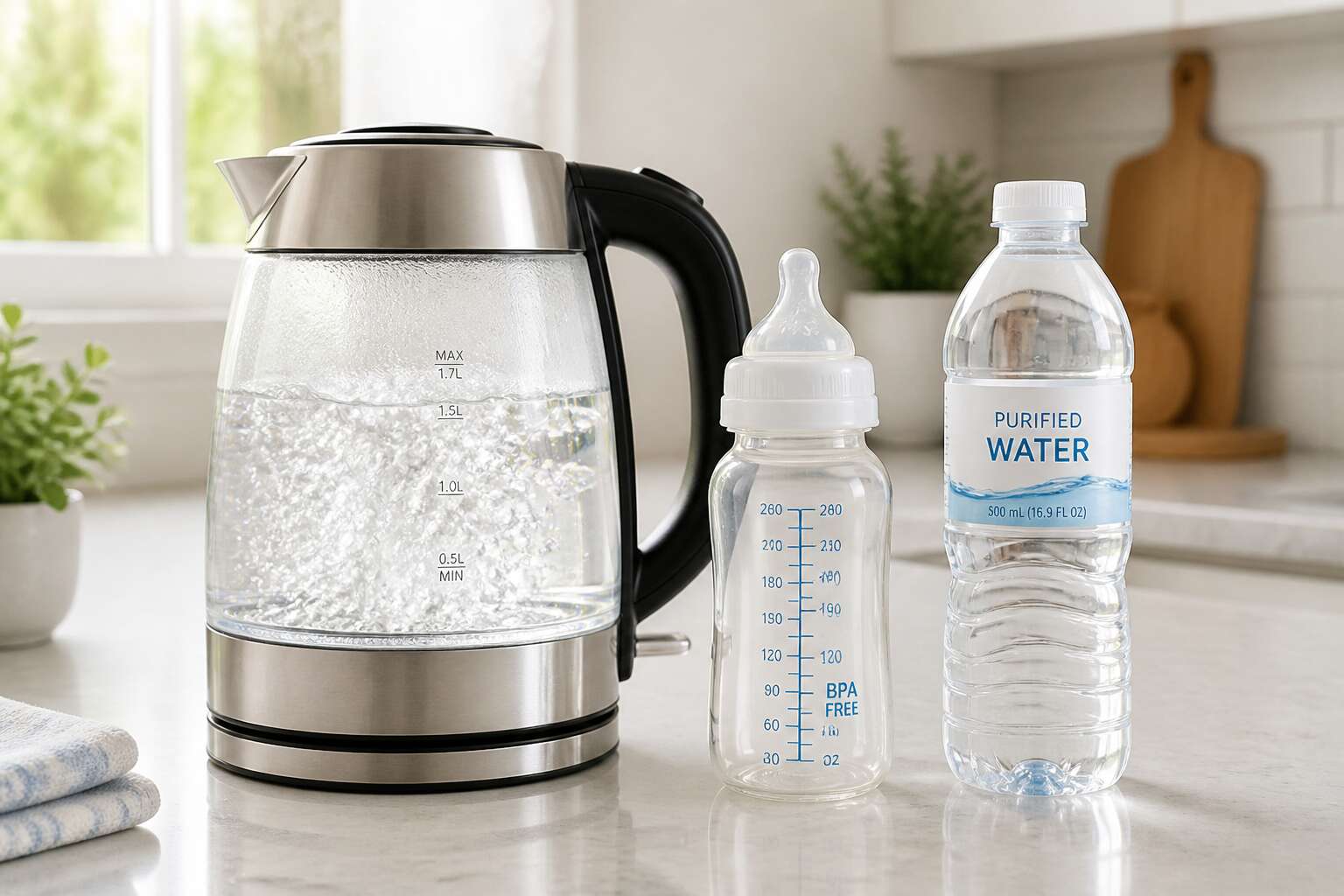
Understanding Why Bottled Water May Need Boiling for Infants
In South Africa, fewer than half of municipalities fully meet national water quality standards, which explains why domestic water filters have become a staple. But when it comes to bottled water, many parents assume the product is already sterile. That assumption is a fragile one. Bottled water is treated for adults, not for the immature immune system of a newborn. The mineral content and the processing environment can still introduce microbial life that an infant’s gut simply cannot handle.
Boiling bottled water for baby use is therefore not a pointless exercise. It becomes a prudent layer of defence against unseen pathogens. Common culprits like Cryptosporidium are resistant to chlorine disinfection and can survive in the bottling facility. This protozoan can cause severe gastrointestinal distress in the youngest patients. The physical act of boiling destroys these organisms with stubborn efficiency.
When you boil water for an infant, the safety net you are casting includes:
1. Eradication of chlorine-resistant parasites.
2. Deactivation of bacterial spores.
3. Reduction of nitrates, which can interfere with oxygen transport in an infant’s bloodstream.
This is why municipalities in the Western Cape have issued advisories encouraging local families to adopt a robust regimen of boiling bottled water for baby formula preparation. The concept that “pure” water requires no intervention is a marketing fever dream. The reality is that infant formula already demands heat to dissolve, and the water needs that same heat to ensure the final mixture is biologically inert. You are not being paranoid; you are being logical.
Step-by-Step Guide to Boiling Bottled Water for Baby Formula
When preparing formula, the safety of water is non-negotiable. In South Africa, municipal water varies in quality, so many parents turn to bottled water. But bottled water is not sterile. That’s why boiling bottled water for baby formula remains the gold standard, a simple ritual that protects fragile digestive systems.
I always start by filling a clean kettle with fresh bottled water. Bring it to a rolling boil for one full minute. Then let it cool to approximately 70 degrees Celsius. That temperature kills pathogens while preserving essential minerals.
- Boil the water and wait for the kettle to click.
- Cool it for 30 minutes or until lukewarm.
- Pour the water into a sterilised bottle, add formula, and shake.
The key is patience. Let that water cool properly, because hot water can destroy the formula’s nutrients. Each batch demands your attention, yet the reward is a calm, safe feeding moment.
Types of Bottled Water and Whether They Require Boiling
Walking down the water aisle in Cape Town can feel overwhelming. Every bottle promises purity. Yet not all water is equal for a tiny tummy. I have seen parents grab the cheapest option, assuming all bottled water is identical. That assumption is risky.
Here is the blunt truth: boiling bottled water for baby remains a critical safety measure, even when the label shows a mountain spring. Sterility is not guaranteed at the source. Boiling kills pathogens, but it does not alter the mineral load.
- Spring water, drawn from underground aquifers, retains variable minerals
- Purified water, distilled or filtered, has a neutral profile
- Mineral water, bottled at the source, may contain high sodium or sulphate
Those trace elements matter. A newborn’s kidneys cannot process excess salts efficiently. So check every label before you commit. In South Africa, municipal water standards differ from bottled ones, yet the advice stays the same. Boiling bottled water for baby is a habit worth keeping. It adds a few minutes but spares you the worry.
Common Pitfalls and Safety Mistakes When Boiling Water for Babies
The kettle’s hiss can make parents overconfident. Boiling bottled water for baby is a precise act, yet the most common pitfall is reboiling the same water. This concentrates minerals and can release unwanted compounds, making the water less safe!
Then comes the cooling phase, where many stumble. Leaving the pot uncovered invites dust and airborne bacteria. Cool the water in the kettle with its lid shut, or pour it into a sterilized jug.
- Boiling the water multiple times in one day.
- Stirring the water with an unwashed spoon.
- Storing the cooled water in a sippy cup that is not airtight.
These mistakes create hidden dangers for a baby’s delicate digestion. The water may look pristine, but its purity has already been compromised.
Alternatives to Boiling Bottled Water for Your Baby
The kettle hums at 3 a.m. in homes across Soweto, yet boiling bottled water for baby is not your only defence. Many South African municipalities already treat their supply to a potable standard, though load shedding often complicates that promise. Sterilising tablets and cold-water chemical solutions step in when the grid fails.
- Sodium dichloroisocyanurate tablets dissolve in cool water within minutes.
- Ready-to-feed infant formula sidesteps water handling altogether.
- Countertop filters with certified membranes remove pathogens without a single flame.
I lean on these options during outages or travel. Still, some parents swear that boiling bottled water for baby offers a familiar calm, a bubble of certainty in a chaotic week. The choice belongs to you.
Travel and Emergency Preparedness: Boiling Water for Infants
Picture this: you are halfway to the Cradle of Humankind, the baby is wailing, and the boot of your bakkie holds a crate of bottled water. Calmness is a learned skill. Boiling bottled water for baby, especially during travel emergencies, turns an ordinary bottle into a safe feeding option. The trick is to boil it properly, with a full, rolling boil for at least one minute. I have learned this the hard way, let me tell you!
A well-prepped emergency kit makes all the difference. Keep these within reach:
- A compact, wind-resistant stove
- Heatproof gloves and a small pot
- A sterilised bottle with a tight lid
For rural detours or grid failures, boiling bottled water for baby is your reliable fallback. It is not glamorous, but it is effective. Bottled water usually contains minerals, so it boils nicely, but always cool it to lukewarm before feeding. Trust the process, and your tiny companion stays content.


0 Comments