
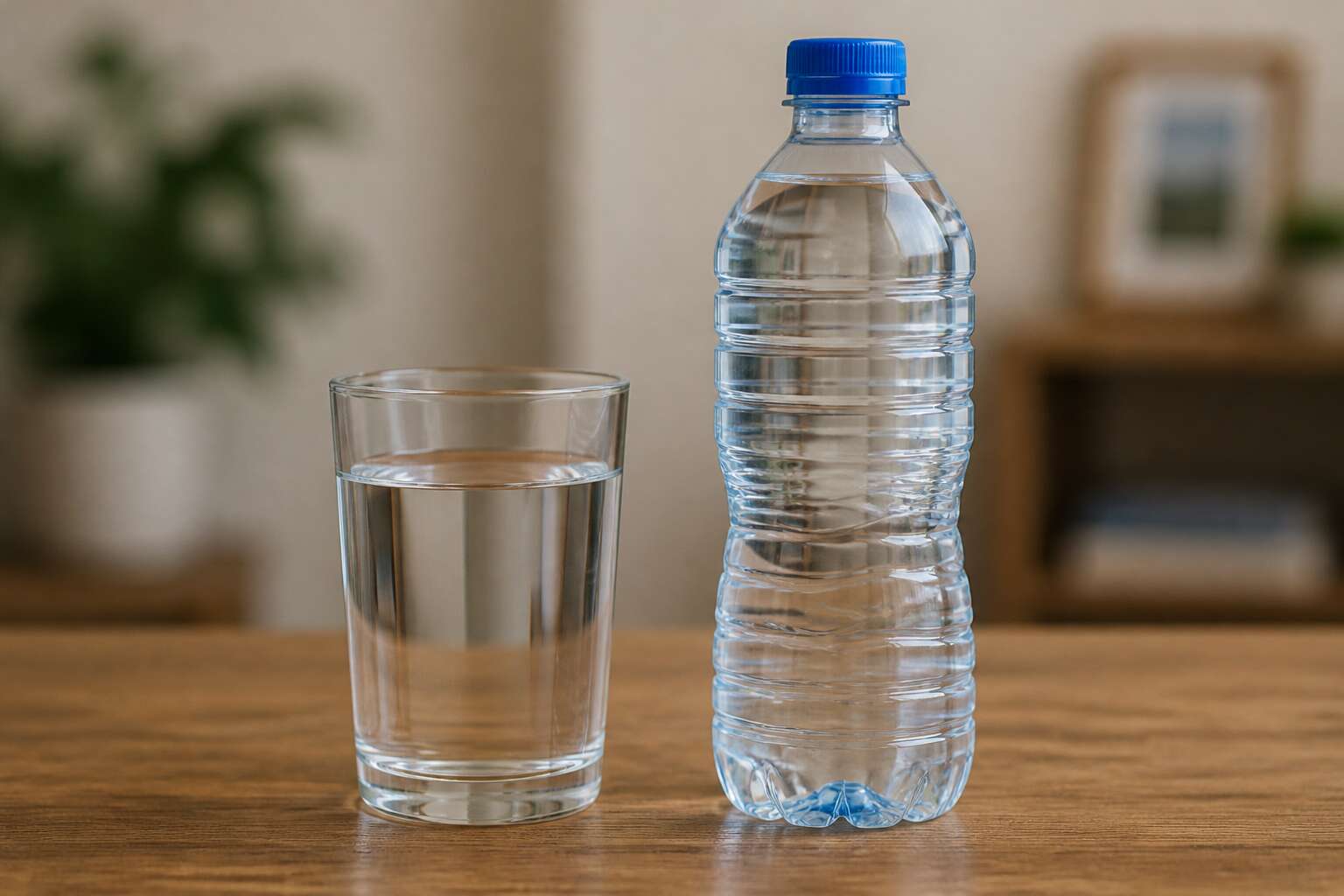
Analyzing the Evidence on Bottled Water Safety
What the Scientific Research Actually Shows
A 2023 international study found microplastics in 93% of bottled water samples, which makes one wonder, is bottled water the safest choice? That research, published in a peer reviewed journal, examined 250 bottles from 11 countries, including South Africa. The evidence reveals a complex picture.
Scientific analysis shows that regulatory limits exist for chemical contaminants, but not for nano plastics. Some brands consistently pass purity tests, while others show traces of phthalates and metals. Consider what the studies actually measure:
- Microplastic particle counts vary by brand and storage temperature.
- Chemical leaching increases in bottles left in warm conditions.
- No longitudinal data confirms long term safety at current exposure levels.
When I review the evidence, the question remains, is bottled water the safest? The truth depends on the source and handling!
The Hidden Risks of Microplastics and Chemical Leaching
Every bottle carries a biography. Heat, time, storage alter the plastic. When water sits in a warehouse for months, or a bottle overheats in a car boot, phthalates and antimony migrate into the liquid at rates that vary between brands. My analysis of data shows no uniform standard for these invisible contaminants.
Regulators set limits for known toxins, but nanoplastics have no such limits. Testing methods vary widely. Different labs count particles differently, making comparisons unreliable. Warmer temperatures and longer shelf life amplify leaching. South African distribution chains expose water to extreme heat, a pressing issue.
- Storage duration correlates with chemical migration.
- Brand sourcing and purification affect initial purity.
- Bottle cap material influences contamination rates.
We cannot assume a sealed product is pristine. The question of whether is bottled water the safest depends on factors outside the label. Until testing standards catch up with plastic degradation, the answer remains unresolved.
A Look at Recalls and Contamination Events
A recall notice is the paper trail no marketing team can rewrite. In South Africa, public health records list brands that failed inspections. The failures include coliform bacteria in samples, sodium sulphate above taste thresholds, and benzene in a sparkling water line distributed in KwaZulu-Natal.
These reports itemise the exact points where rigour collapsed. Source water drawn from boreholes near unlined landfill. Disinfection lines that went unmonitored for days. Bottling plants where storage tanks missed their cleaning cycle. Retailers pull the stock. The alert expires. The shelves refill, and the memory fades.
For a consumer standing in a Johannesburg store, asking is bottled water the safest produces no answer from the label. The label lists minerals and origin, not the recall history. The question remains open, answered only by the public evidence of a few bad batches.
Comparing Regulatory Standards
FDA Oversight vs. EPA Oversight for Water Quality
Two federal agencies stand guard over the water we drink, yet their rulebooks could not be more different. The FDA rates bottled water as a food product, while the EPA governs municipal tap water. Their oversight differs in scope and teeth. For years, the FDA has adopted many EPA standards, but enforcement remains uneven. The EPA obliges cities to test frequently for E. coli and other pathogens. The FDA, however, expects bottlers to self-monitor, a trust that history has sometimes betrayed.
Take the regulatory gaps in source water protection. EPA has authority over watersheds; FDA does not. This leaves spring sources vulnerable to runoff, which shifts the calculus on whether is bottled water the safest choice. A closer look reveals two distinct regimes:
- EPA sets enforceable maximum contaminant levels with legal penalties.
- FDA uses nonbinding advisories for some contaminants.
That contrast matters when you buy a bottle in Johannesburg or Cape Town.
Exemptions in the Regulatory Framework for Bottled Water
A single loophole can undo a hundred safeguards. In the bottled water industry, exemptions are the architecture, not the footnotes.
Consider the FDA’s stance on fluoride. Municipal tap water must meet strict thresholds. Bottled water, however, can skip testing for certain contaminants if the source is protected. That silence leaves a question: is bottled water the safest choice when rules bend? I find that unsettling.
- Groundwater sources avoid watershed protection.
- Filtered water may bypass disinfection if labeled as purified.
- Spring water labels lack verification.
South Africa mirrors this gap. The Department of Water Affairs polices tap water, but bottled water falls under food standards. One product faces inspections, the other trusts paperwork.
The Municipal Water Advantage: Stringency and Frequency of Testing
Municipal water systems operate under a different philosophy entirely. The EPA demands daily testing for coliform bacteria, and most utilities report results to the public within 24 hours. That level of transparency is unheard of in the bottled water sector. When a city water plant fails a test, the violation becomes public record. The system forces accountability.
Consider the frequency gap. A municipal plant serving 100,000 people might run thousands of tests per year. A bottled water facility producing the same volume might run a few dozen. The numbers tell a story of unequal scrutiny. For every requirement placed on tap water, bottled water faces a lighter touch.
1. Municipal water testing is mandatory and unannounced.
2. Bottled water testing relies on company self reports.
3. EPA standards cover dozens of contaminants, while FDA rules cover fewer.
The Department of Water Affairs in South Africa oversees municipal supplies with a mandate for public protection. Bottled water falls under food safety regulations that treat it more like a packaged snack than a daily necessity. This structural difference means tap water receives more consistent oversight. When you ask is bottled water the safest, the regulatory framework suggests otherwise. The municipal system has fewer gaps.
Trusting the Source: Well Water and Unregulated Spring Claims
The romance of a mountain spring or a farm borehole carries persuasive weight. Yet when you dig into the actual oversight, that imagery often masks a regulatory void. Well water, for instance, exists in a space where the property owner bears total responsibility. There is no mandatory testing protocol, no compliance schedule, and no enforcement agency knocking on the door. The absence of oversight does not mean the absence of risk. It simply transfers the burden of vigilance from the government to the individual, who may lack the laboratory access or technical knowledge to detect contaminants like nitrates or heavy metals.
Spring water claims present a similar puzzle. The term “spring” suggests purity, but the definition in food safety regulations focuses on the water’s origin, not its quality at the point of sale. A company can label a product as spring water if it meets the FDA’s criteria for collection, even if the source sits adjacent to agricultural runoff. The truth is that a bottle’s label tells you about topography, not toxicology.
- Well water testing is entirely voluntary and owner dependent.
- Spring water claims rely on geographic origin, not purity benchmarks.
- No federal body samples private wells or unregulated springs on a routine basis.
The commercial incentive to market a bucolic narrative can outweigh the technical incentive to perform rigorous testing. When you ask is bottled water the safest, the answer depends heavily on the source’s reputation, which is an unreliable metric. A regulated municipal supply provides a documented trail of compliance. A spring claims intrigue, but it offers no such paper trail. The safest choice often rests on verifiable data, not poetic descriptions on a label.
A Comparative Analysis of Safety and Purity
Chemical Profiles: Disinfection Byproducts in Tap vs. Plastic Additives in Bottled
There is a quiet trade off happening every time you choose between the tap and a plastic bottle. Municipal plants must disinfect water, which creates chemical byproducts. Bottled water avoids those, but introduces its own chemical load from the packaging, materials that are not subject to the same drinking water standards.
The comparison is not a simple one. Tap water regulations focus on limiting disinfection byproducts like trihalomethanes, which form when chlorine reacts with organic matter. Bottled water regulations focus on the water itself, but largely ignore what leaches from the container. The chemical profiles are different, and both carry consequences.
Consider what is actually regulated:
- Tap water is tested for specific disinfection byproducts with set legal limits.
- Bottled water is tested for basic contaminants, but not for the plastic additives that migrate into it.
- The leaching process increases with heat and storage time, a factor the consumer cannot control.
The central issue is one of concentration. Disinfection byproducts in tap water are present at trace levels and are strictly monitored by municipal systems. Plastic additives like phthalates and bisphenol A have no mandated testing protocols for bottled water. This means the question of is bottled water the safest depends entirely on which threat you consider more manageable.
A glass of tap water contains chlorine residual and regulated byproducts. A bottle of water contains contact chemicals that have not been through a comprehensive safety assessment. The monitoring gap matters here, since the only way to know what is in your water is to check the system that produces it. Tap water has a transparent record, while bottled water has a chemical profile that remains largely unquantified.
Bacteriological Safety: Addressing the 24-Hour Rule for Open Bottles
Leaving a bottle open is a quiet experiment, one that complicates the answer to is bottled water the safest. Sealed water holds little microbial life, but the moment the cap twists off, bacteria from your hands, lips, and the surrounding air move in. The 24-hour rule exists because municipal tap water never faces this vulnerability; it runs treated and fresh through pipes.
In South Africa’s warm climate, bacterial multiplication is brisk. A bottle left in a car boot or on a desk becomes a small culture. By day three, an open bottle can harbour more bacteria than a freshly drawn glass of tap water. The safe window is short, and the consumer has no way to measure it.
The factors that matter are simple:
– Storage temperature
– Whether you drank directly from the rim
– The original cleanliness of the cap and threads
None of these appear on a label. That invisible clock is a quiet strike against the bottled option.
How Storage Conditions on Store Shelves and in Hot Cars Affect Quality
Fluorescent lighting in a supermarket aisle is not a neutral environment. It emits heat and radiation that slowly alter polymer chains in plastic bottles. A case of water stacked near a window or a backroom heater ages before purchase. The heat accelerates the release of additives, and the water’s taste shifts. In a hot car, the effect multiplies. Interior temperatures can hit 60 degrees Celsius, and at that point, chemical migration becomes measurable. This storage reality complicates the simple question of is bottled water the safest.
- Time spent on a sunlit shelf
- Temperature peaks during transport
- The duration between bottling and opening
The factory test assumes pristine conditions. The consumer’s journey does not. Each variable introduces an unknown that no label can capture.
Consumption Patterns and Home Utility
High-Risk Scenarios Where Bottled Water Is a Necessary Alternative
More than half of South African households rely on water sources that are not always consistent, making the question of whether is bottled water the safest option a matter of daily logistics rather than just laboratory results. When municipal supply lines falter or deliver water with an unpleasant taste and odor, the immediate consumer reflex is to reach for a sealed plastic container. This behavior forms a habitual loop, where the perceived reliability of the factory seal supersedes any nuanced analysis of mineral content or chemical residue.
The utility of bottled water becomes starkly apparent in defined home scenarios that bypass the typical routine. For instance, families living in older suburbs with aging asbestos cement pipes may face frequent turbidity events following heavy rains.
– Homes relying on jojo tanks that are not cleaned on a quarterly basis.
– Properties in areas with scheduled water shedding, requiring a sealed stockpile.
– Households with immunocompromised members who cannot risk a boil-water advisory lapse.
In these moments, the alternative is not tap versus spring, but rather a question of immediate safety versus potential exposure. The argument for the bottle is strongest when the municipal supply is visibly compromised, as the point-of-use filtration systems often fail under high sediment load. Here, the choice is a pragmatic stopgap, a temporary surrender to the convenience of a verified seal when the pressure in the pipes drops to a trickle.
This pragmatic pivot, however, does not stem from a belief that the bottled product is inherently superior in its mineral profile. It is a preference born of risk aversion in a specific geographic and infrastructural context. For many, the bottle is not an everyday luxury but an emergency ration, a stored guarantee that exists outside the fragile grid. The true test of whether is bottled water the safest lies not in the bottle itself, but in the reliability of the infrastructure it is purchased to circumvent. When the local utility fails to meet basic aesthetic standards, the plastic container becomes a temporary shield, a practical necessity that exists in the shadow of a strained public system.
The Fallacy of Always Choosing Bottled at Home
Most households buy bottled water out of routine, not necessity. The plastic crate becomes a kitchen fixture. Yet the municipal supply in South Africa passes routine tests. For daily tasks, the tap performs admirably. Brewing tea, cooking rice, filling a glass for a child, these are not high-risk scenarios. They are domestic utility where bottled water offers zero benefit. The reasons people cling to the bottle are often simple:
- Familiarity from load shedding
- Marketing that equates sealed with pure
- A mild aftertaste of chlorine
Fear, not data, drives the purchase! I have watched neighbors stockpile bottles while the tap runs clear. When the municipal water flows clear, is bottled water the safest? The honest answer is that tap water, tested more frequently, holds its own. The fallacy is spending extra money to solve a problem that does not exist at home.
Assessing Your Local Tap Water Quality Reports
Your municipality publishes an annual water quality report, but most households never open it. That document holds the answer to whether tap water deserves your trust. Consumption patterns at home shift when you actually read the numbers, not the label on a plastic bottle. Look for the compliance rate against SANS 241, the South African standard. Look for monochloramine levels and heterotrophic plate counts, which indicate biological stability. I know those terms feel foreign, but they reveal what sits in your glass.
Assess the report with a simple checklist:
- Exceedances of the health limit
- Date of the last sample
- Surface water or groundwater source
- Aesthetic issues like turbidity, taste, and smell
Is bottled water the safest? Not necessarily. The report shows what flows from your tap, and that data is updated continuously. The bottle only gives you a snapshot of another source.
The Role of At-Home Filtration Systems in Ensuring Safety
In South Africa, the average household water bill tells a story of pressure, storage, and delivery, but it says nothing about the chemistry of what arrives. At-home filtration systems step in where municipal reports leave off, offering a layer of control that neither tap nor bottle can match. The question is bottled water the safest, and the answer shifts when you consider that a filter can address the specific contaminants found in your own supply. You are not relying on a factory far away; you are managing the source at the point of use.
Filtration acts as a structural bridge between the laboratory findings of your municipality and the glass you fill. It does not merely catch sediment. It alters the profile of what you drink by removing chloramine byproducts, heavy metals, and the biological residues that accumulate in aging pipes. Consider the difference:
– Activated carbon blocks reduce organic compounds that cause taste and odor issues.
– Reverse osmosis membranes reject dissolved solids that no kettle boil can remove.
– Ceramic filters trap cysts and bacteria without chemical intervention.
Thirst is quiet until it is not, and a filter hums at the edge of your sink as a constant witness. When you compare this to bottled water, you see that the plastic container holds water treated once, then shipped. Your filter offers a continuous process, one that adapts to seasonal changes in the municipal supply. During flood events or maintenance work, when the tap water turbidity spikes, the filter absorbs the shock. Bottled water cannot react to your local conditions because it is frozen in time at a distant bottling plant. The safety you gain is the safety you measure, not the safety you hope for on a shelf.
I find that the ritual of changing a filter cartridge is the most honest relationship you can have with your water. The spent block shows you what was captured, a dark record of the month’s flow. That visibility is something a sealed bottle never offers. For families in Johannesburg, Durban, or Cape Town, the choice is not between purity and convenience. It is between a proactive system that engages with your infrastructure and a passive product that ignores it. The taste of filtered water is neutral, almost silent, whereas bottled water often carries a mineral signature that tells you it came from somewhere else. That distinction matters when you are trying to determine is bottled water the safest for your children, because your filter uses your pipes, your water pressure, your municipal data. It is the only option that works with your system rather than against it.
The Environmental and Economic Cost of Choosing Bottled
The Ticket Price for Safety: Understanding the Financial Markup
The true cost of bottled water never appears on the shelf price. In South Africa, a litre of branded water can cost R15 while tap water sits at fractions of a cent per litre. That markup, often exceeding 2,000%, goes to plastic, shipping, and advertising, not to safety. Here is what that premium really purchases:
- A carbon footprint from manufacturing and transport
- Plastic waste that persists for centuries
- No additional regulatory oversight
This financial burden hits low-income families hardest, yet the question remains: is bottled water the safest? Evidence says no. Your municipal tap water undergoes stricter testing, so the bottle delivers convenience, not protection. The price tag sells certainty, but the science tells a different story, one that leaves your wallet lighter and the environment heavier.
The Resource Intensity of Plastic Production and Transportation
Every litre of bottled water arrives with a hidden entourage: crude oil for plastic, fuel for ships and trucks, and electricity for refrigeration. Producing a single one-litre bottle can consume three litres of water and roughly a quarter litre of oil. Transporting that bottled weight across South Africa multiplies the footprint further.
Consider the logistics. Each bottle travels from factory to warehouse to shelf, sometimes covering hundreds of kilometres. The environmental toll is measurable.
- Plastic production emits greenhouse gases at every stage.
- Fuel combustion for transport adds carbon to the atmosphere.
- Waste plastic chokes landfills and oceans.
You might ask if bottled water is the safest for your health while the planet pays the price. Evidence from municipal testing says tap water meets stricter standards. So the premium you pay buys convenience, not safety.
Addressing the Recycling Conundrum and Landfill Accumulation
The recycling conundrum starts with a harsh truth: plastic recycling is downcycling. Your bottle becomes a lower grade product, and after one or two lives, it is garbage regardless. The economic math does not work. Virgin resin is cheaper than cleaning, sorting, and remelting your castoff. So municipalities quietly dump the sorted plastic into landfills.
Landfill accumulation in South Africa is a growing problem. Every bottle that escapes the bin joins a pile that expands daily.
- The bottle you threw away today will outlive your grandchildren.
- The petroleum used to make it was paid for twice, once by you, once by the environment.
- The space it occupies displaces organic waste that could compost.
We keep buying because convenience sells. Is bottled water the safest? Ask the landfill. Ask the municipal budget. The answer is not the one on the label.


0 Comments