
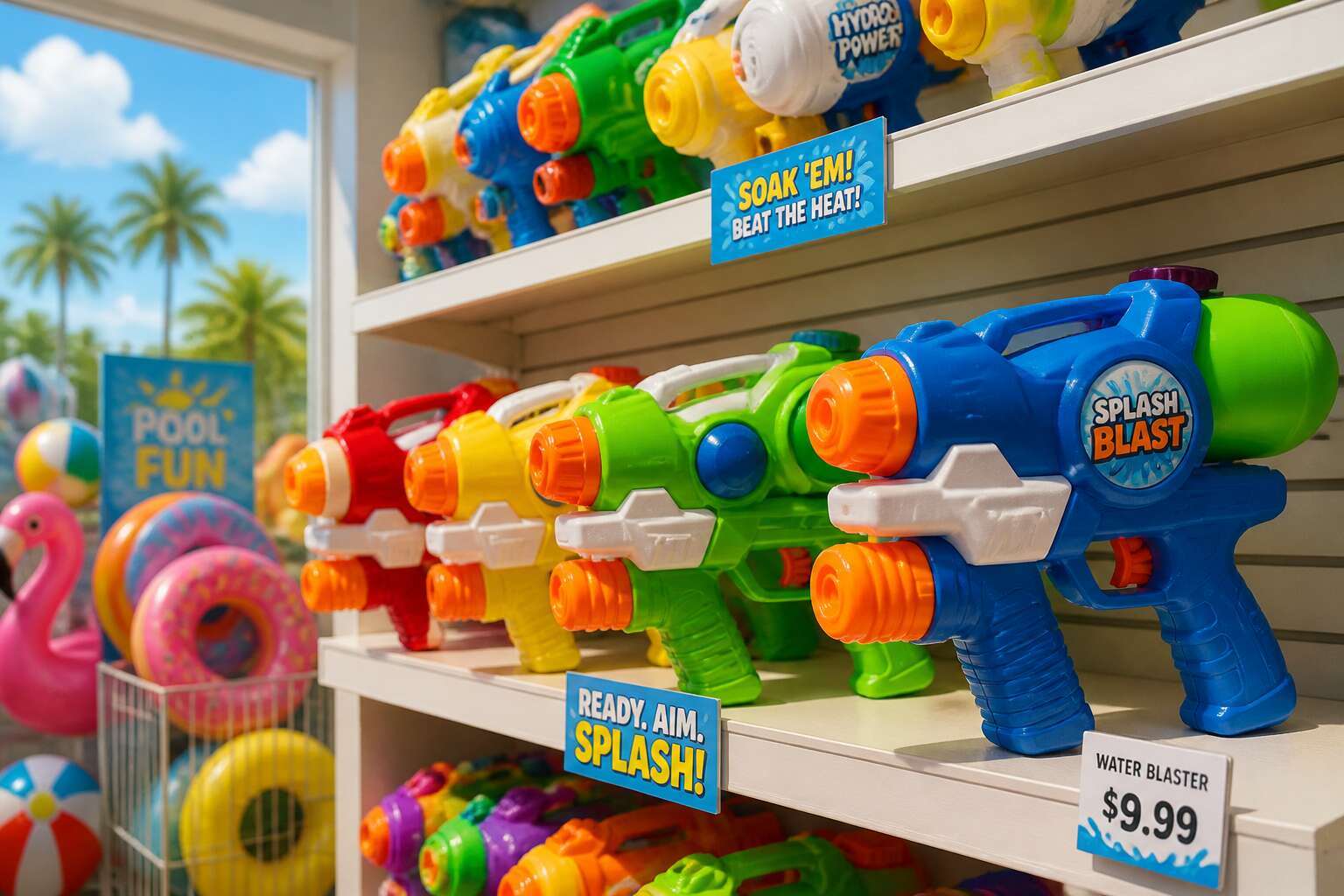
Understanding Water Gun Types and Mechanisms
Pump-Action Soakers: Power and Control
The pump-action soaker is a study in deliberate violence. Each stroke of the piston compresses air and water into a single, focused chamber, building pressure until the trigger releases a stream with surgical precision. This mechanism rewards patience and physical effort, offering range and accuracy that rapid-fire alternatives cannot match.
In my experience, the pump’s resistance tells a truth. A firm, even stroke produces a tighter arc; a rushed one scatters the shot. When you shop water guns for competitive skirmishes, pump-action models provide that tactical advantage. They are tools for those who measure momentum. There is no mist, only intention. Effective use requires understanding the relationship between stroke speed and water pressure. For players navigating Cape Town’s gusty coastlines, this control becomes essential. The weapon transforms into an extension of the arm, a conduit for calculated response.
Battery-Powered Blasters: Automatic Fire
Battery-powered blasters abandon the ritual of the pump. A motor spins, gears engage, and water erupts in a continuous stream. There is no pause for breath. The trigger becomes a commitment.
These devices have a temperament. They demand attention to battery life and water supply, both of which deplete faster than you expect. When you shop water guns for sustained suppression, the automatic blaster delivers. It is attrition made manifest!
- Rate of fire sets the span of suppression.
- Battery capacity fades with each engagement.
- Water tank volume dictates the length of the assault.
The noise alters the encounter. A whine, a hiss, a constant pressure against the air. This is not about precision. It is about volume, the ability to flood a position until nothing remains dry. In the Cape heat, that volume is what wins. Those who shop water guns for open ground should look here first.
Pressurized Reservoirs: High-Pressure Performance
Pressurized reservoirs abandon the manual pump entirely. A sealed chamber holds air under compression, and when you pull the trigger, that stored energy propels the water forward with a consistency that pump-action soakers cannot match. The stream holds true from first shot to last. For those who shop water guns, this design earns attention.
The trade-off sits in the chamber itself. Each fill demands a pressurization source, usually a hand pump or a CO2 cartridge, and the pressure curve declines as the tank empties. You feel the drop before you see it. The stream softens. The range shortens. The encounter shifts!
When you shop water guns with precision as the priority, the pressurized reservoir delivers a specific profile:
- Consistent shot velocity across the early magazine
- No pumping between shots
- Predictable pressure decay
The discipline required here is anticipation. The pressure curve dictates the pace of every engagement.
Compact and Discreet Models for Quick Draws
Close range changes everything. For the moment an encounter starts around a corner, the compact water gun type answers first. These models trade range for speed, and the trade matters. A small frame holds less water, but it also allows a faster draw from a holster or pocket. The trigger response is immediate, almost instant, and that saves you in a tight corridor.
These discreet units rely on simple mechanisms. A single-chamber piston sits inside the grip. One pull compresses the spring, one pull fires. There is no reservoir pressure to manage, no battery to drain. The design is honest.
When you shop water guns with stealth in mind, check for these traits:
- A barrel under twenty centimetres for low profile carry
- Grip-mounted firing mechanism for one-hand operation
- Quick-fill ports that accept a bottle cap or tap
Some models even use a squeeze bulb instead of a trigger, which shortens the action further. For anyone who shops water guns for stealth, the compact type suits a low profile during close encounters.
Customizable and Modular Water Systems
Understanding the inner workings of a water gun changes the way you shop water guns. Each mechanism behaves differently. Piston systems deliver a single, sharp blast per pull. Gear-driven pumps build steady pressure over several strokes. The valve design determines whether you get a fine mist or a drenching stream.
What excites me most is the rise of modular systems! You can swap barrels, change nozzle plates, or attach a secondary reservoir on the fly. A universal rail system lets you clip on spare tanks.
Consider these modular components:
- Interchangeable nozzle heads for different spray patterns
- Quick-release tank adapters for swapping mid-battle
- Picatinny-style rails for mounting accessories
Whether you shop water guns for a child or for yourself, the modular approach offers flexibility that fixed designs cannot match. The right combination turns a basic soaker into a tool tailored for the garden or the farm dam.
Key Features to Evaluate Before Making a Purchase
Water Capacity and Tank Design
Water capacity is the first specification I check when I shop water guns. A larger reservoir means longer engagements, but it also adds heft. Tank design determines how that weight sits on your body. A backpack reservoir with a hose shifts the centre of gravity to your back. A narrow tank digs into your ribs when you crouch. A curved tank fits your torso and stays stable during movement.
When you shop water guns, the fill port matters as much as capacity. A wide opening reduces spillage and speeds up reloads. A narrow opening forces you to use a funnel. Look at the valve system as well!
- A screw cap with a tethered seal prevents losing the lid.
- A quick-release latch allows one-handed refills.
- A pressure-release valve stops airlock issues mid-fight.
The interplay between tank size and shape determines stamina in prolonged skirmishes.
Effective Range and Stream Precision
Effective range and stream precision separate a reliable soaker from a splashy annoyance. When you shop water guns, you will see range claims printed on packaging, but those figures often come from lab tests with perfect pressure. In the field, wind and movement change everything. A stream that stays tight at six metres beats one that atomises at three.
I look for nozzle geometry and a smooth trigger valve. Those two parts dictate whether you land a soaking shot or just dampen someone’s shoes.
Here is what I check:
1. Linear stream at max trigger pull.
2. Minimal drop-off after the first two seconds.
3. Adjustable spray patterns without sacrificing pressure.
A precise stream conserves water. That matters in a long skirmish. Range is useless if your aim scatters. Test the trigger resistance before you commit, because a heavy pull ruins accuracy.
Ergonomics, Weight, and Grip Comfort
A water gun that shoots straight is useless if you cannot hold it steady. Ergonomics determine whether you stay in the fight or retire early with cramped hands. When you shop water guns, weight distribution matters more than the raw number on the scale. A rear-heavy tank pulls your wrists down after twenty minutes. A balanced frame keeps the nozzle aligned with your natural sightline.
Grip comfort is subjective, but certain traits signal quality. Look for textured rubber inserts that absorb vibration from pump actions. Check the trigger reach against your finger length. A shallow grip forces you to curl your fingers awkwardly, which introduces micro-tremors.
- Test the center of gravity while the reservoir is full.
- Feel for sharp edges along the handle seam.
- Simulate a fast draw to see if the grip twists in your palm.
Your hands sweat, your gloves add bulk, and your stance shifts. The right ergonomics make those variables invisible.
Durability and Build Quality Under Rough Play
The sun and rough grass of a South African summer punish weak plastic. When you shop water guns, expect a few tumbles. Durable construction starts with the material itself. Look for ABS or nylon composites rather than brittle thin shells. Check the seams where the two halves meet. A flush fit means the manufacturer took time; a raised ridge means a weak point.
Impact resistance matters most at the tank base and the nozzle. These areas hit the ground first during a dive. Reinforced bumpers extend the lifespan.
- Inspect the trigger guard for flex under pressure.
- Twist the pump handle to feel for play in the joint.
- Check the reservoir cap threads for shallow cuts.
Water exposure accelerates wear. Open the valve and look for metal components that rust. Good build quality uses sealed bearings and corrosion proof springs. When you shop water guns, a sturdy frame forgives clumsy grips and harsh landings.
Refill Speed and Filling Ease
Refill speed is the silent factor that decides a skirmish. A tank that takes a minute to fill is a minute of vulnerability. When you shop water guns, examine the reservoir opening first. A narrow neck forces slow pouring and trapped air pockets that create backflow.
Wide mouths and funnel shaped inlets let you refill from a bucket or tap in seconds. Some designs include a quick release valve that drains water instantly. Others require unscrewing the cap and fumbling with small flaps. The same principle applies when you shop water guns for children: impatient hands need simple mechanics.
- Check if the cap is tethered to prevent loss in grass.
- Look for translucent tanks that show the water level.
- Test the valve for one hand operation.
Filling should not demand tools or awkward angles. Consider your water source, whether a fast stream or a stagnant pond. Efficient loading changes the rhythm of play and keeps you in the fight.
Age-Appropriate Design and Safety Components
Every summer, a poorly chosen water gun turns a joyful battle into a tearful retreat. A blaster that feels effortless in an adult hand becomes unwieldy in a child’s grip. When you shop water guns, age appropriate design means matching the toy’s weight, resistance, and length to the child’s actual strength.
Safety components work quietly beneath the bright plastic.
- Soft rubber tips cushion accidental impacts to faces and arms
- Pressure release valves prevent tanks from building hazardous force
- Textured grips keep wet fingers steady during quick reloads
Younger players need shorter barrels and lighter reservoirs. Older children can manage pump action resistance and longer reach. Honest labeling helps when you shop water guns for a specific age group, preventing frustration for everyone involved.
Matching Water Blasters to Different Age Groups
Toddler-Friendly Soakers with Soft Streams
There is a particular magic in watching a three year old discover the joy of a water blaster. The power of pump action soakers is not for them. Instead, the soft stream from a toddler friendly model becomes a gentle introduction to summer play. When you shop water guns for the youngest players, the stream should be your first concern. A wide, diffuse spray that never stings marks a well designed toddler soaker.
Consider these qualities:
- A stream that arcs, never startling a young face.
- A reservoir that empties quickly for frequent pit stops.
- Bright colours that signal pure fun.
The real craft of these tiny soakers lies in their restraint, and I love that about them! They offer a child the confidence to join older siblings without fear. There is no need for distance or force, qualities that matter when you shop water guns for a toddler. Every well designed toddler blaster rewards curiosity with a gentle splash.
Elementary-Age Blasters for Backyard Battles
For children moving beyond toddler stages, the elementary years demand a different kind of water blaster. When you shop water guns for this age, the priority is parity, not power. Backyard battles across the Highveld require blasters that give every child a fair chance to run and fire.
I look for models with an honest trigger pull and a stream that travels a few metres without drenching the shooter. A balanced weight keeps small hands quick and steady, which is exactly what you want for backyard battles!
A reliable elementary blaster offers:
- a rear tank that doesn’t tip the muzzle down
- a short pump stroke for fast reloads
- a body that survives tumbles off the jungle gym
These blasters teach timing and teamwork, the real game of summer!
Pre-Teen and Teen Models for Competitive Play
The Highveld heat turns pre-teen rivalries into a contest of decision speed. I have seen matches where a single accurate stream ends a standoff in seconds.
Shop water guns for this age group with adjustable pressure and stream consistency. A longer barrel stabilises aim, while a rear-mounted tank balances weight during sprints.
- Variable trigger resistance for snap shots
- Threaded nozzle for quick stream swaps
- Quick-release harness for mobility
These models reward players who plan their reloads. The satisfaction of hitting a moving target at ten metres outweighs raw power.
Adult-Use Power Soakers for Serious Enthusiasts
Adult players take the water fight seriously, and the blasters they carry reflect that commitment. When you shop water guns for this level of play, look for models with all-metal internal components and replaceable seals. These units endure seasons of abuse without losing their edge.
The Highveld autumn hosts several informal adult water battles. I have watched grown players debate stream drop at distance for longer than they debate car specifications. Dedicated owners run multiple blasters for different loadouts. A compact sidearm suits close quarter work. A shoulder-mounted unit empties a reservoir in forty seconds.
This level of engagement changes what matters in a purchase:
– Weight distribution becomes critical during hour-long matches
– Trigger fatigue determines accuracy late in the day
– Aftermarket support exists for main seals and valve kits
These are tools for people who measure summer in battles won.
Comparing Popular Brands and Their Standout Offerings
Legacy Brands: Proven Performance Over Time
When South Africans shop water guns, the names they remember from childhood carry weight. Super Soaker, built from a NASA engineer’s prototype in 1991, has outlasted every challenger. The reason is straightforward: their internal mechanisms hold pressure long after newer competitors empty their tanks. Buzz Bee, the other long standing manufacturer, focuses on stream volume over distance. Both brands earned customer loyalty through reliable summer combat!
Standout legacy offerings include:
- The Super Soaker line with expanding reservoir systems.
- The Buzz Bee range with high output nozzle clusters.
- Limited edition collaborations that collectors actually use.
These models remain mainstays because they deliver what the packaging promises. No surprises, no breakdowns.
Value-Focused Manufacturers Offering Budget Options
When South Africans shop water guns with a budget in mind, names like X-Shot and Water Warriors deserve attention. These value-focused manufacturers skip flashy gimmicks and concentrate on dependable internals. Their products hold water without leaking and deliver a steady stream, even if the distance falls short of premium rivals.
Budget offerings often surprise buyers with their resilience. The plastic feels lighter, but the triggers stay responsive and the tanks withstand rough drops on grass. I have seen these blasters outlast pricier models in sustained backyard fights because they have fewer moving parts to fail.
- X-Shot pistols excel at fast draws and quick follow-up shots.
- Water Warriors rifles prioritize tank capacity over pressure.
- Both brands keep replacement parts affordable and widely available.
The tradeoff is stream precision and shooting distance. You trade refinement for simplicity, which suits families buying multiple units. When you shop water guns for group play, budget options let everyone join the battle without expensive replacements.
Niche Brands for Collectors and Custom Builders
When South Africans shop water guns from the premium tier, two names dominate the conversation: Spyra and Buzz Bee. Spyra commands attention with its electric pulse system, yet its price tag makes it a collector’s piece rather than a family staple. Buzz Bee counters with reliable pressure mechanics that feel closer to traditional soakers, minus the battery anxiety.
Niche builders push further. Small workshops in Cape Town and Johannesburg hand-modify existing shells, swapping nozzles and reinforcing seals for competitive play. These custom units rarely appear in retail catalogues, which is precisely the point.
- Spyra’s rechargeable platform offers precision no pump blaster matches.
- Buzz Bee’s affordability keeps it relevant in junior leagues.
- Custom builders prioritise durability over polish, and that tradeoff wins respect.
Serious enthusiasts shop water guns from these sources when standard options feel predictable.
Budget Planning and Price Ranges
Entry-Level Soakers Under Twenty Dollars
Twenty dollars might not sound like much, but it buys genuine capability in the budget tier. For South African buyers, this range is the starting point. The trade-offs are simple. You skip battery-powered systems and pressurized tanks, but you gain immediate usability and easy maintenance.
Look for these fundamentals when you shop water guns under twenty dollars:
- Basic single-stream pistols with dependable triggers
- Compact soakers with comfortable grip sizes
- Small reservoirs that balance weight and playtime
The real value in this bracket is predictability. A R350 soaker should fire on schedule and keep operating through a full afternoon. When you shop water guns within this budget, stick to these foundational features. That approach keeps your first purchase honest.
Mid-Range Blasters Balancing Cost and Performance
The jump from entry-level to mid-range pricing is where water guns shed their novelty label. You are now shopping for performance. In South Africa, the mid-tier bracket roughly spans R400 to R900, and it rewards buyers who pay attention to the details hidden inside the plastic shell.
What does the extra money buy? Mostly consistency. A budget soaker fires when you pull the trigger. A mid-range blaster fires the same way every time, across an afternoon of refills and running battles. That predictability matters more than raw power. There is also the matter of hidden costs. Cheaper blasters break. Replacing a R200 blaster twice means you have spent R400, which could have purchased one blaster that holds up for seasons. When you shop water guns in this range, you are paying upfront to avoid that cycle.
Premium Water Cannons for Enthusiasts
When you decide to shop water guns at the premium end, you are no longer buying a toy. You are purchasing a hydraulic instrument with a three year warranty on the pressure chamber. In South Africa, serious enthusiasts look at price ranges from R900 upwards, and the jump is jarring!
Premium water cannons demand strategic budget planning. The initial outlay is painful, but the cost per battle evens out when you factor in the lifespan. These blasters use reinforced polymers, replaceable seals, and valves that do not leak after a season.
- High-capacity pressure chambers that sustain output
- Precision nozzles for adjustable spray patterns
- Ergonomic harnesses for extended play
That R900 figure buys consistency under extreme conditions. When you shop water guns with this mindset, you skip the upgrade cycle entirely.
Seasonal Sales, Bundles, and Multi-Pack Deals
Sensible budget planning for water play begins with recognising that the retail calendar rewards patience. In South Africa, prices for the same blaster can swing by thirty percent between the summer peak and the autumn clearance sales. When you shop water guns during these windows, you are paying for the previous season’s enthusiasm, not the hardware’s actual worth.
Bundles and multi-packs offer a separate kind of mathematics. A single high-end soaker demands a serious outlay, but a three-pack of mid-range models often costs less than one premium unit. For birthday parties, school holidays, or neighbourhood skirmishes, that arithmetic changes everything.
- Compare price per blast, not price per unit
- Check autumn and winter specials at major retailers
- Inspect bundle contents for hidden add-ons
Warranty and Replacement Part Costs
Most shoppers fixate on the upfront price tag, yet the true cost of a blaster emerges only after months of backyard firefights. When you shop water guns in South Africa, ask about warranty coverage and replacement part availability before committing. A cheap soaker that snaps a trigger after three weeks costs more in frustration than a mid-range model with a twelve month guarantee.
Replacement nozzles, O rings, and pressure chambers often determine whether a broken blaster becomes landfill or a quick fix. Some manufacturers stock spare parts locally; others force you to import them, doubling the repair expense. Several factors shape the real price:
- Warranty duration relative to the expected lifespan of the pump mechanism
- Replacement seal availability for your specific model
- Potential part costs factored into overall price ranges
Budget planning thus requires weighing initial outlay against long term maintainability, not just the sticker price.
Safety, Maintenance, and Long-Term Storage Tips
Preventative Safety Checks Before Each Use
Every season, countless shop water guns fail not from battle damage, but from neglected upkeep. A few minutes of preventative care can double a blaster’s lifespan.
Before each use, run through these checks:
- Inspect all seals and gaskets for cracks or wear.
- Confirm the nozzle is free of debris and mineral buildup.
- Operate the pump or trigger several times to verify smooth action.
These simple steps reveal issues before they ruin a game. After use, drain the tank completely. Stagnant water leads to mold growth and corroded internals, so flush with fresh water and let all components air dry. For long term storage, loosen the pressure release valve if present, and store the blaster in a cool, dry spot. Silicone based lubricant on moving parts prevents sticking. This maintenance ritual keeps your shop water guns prepared for the next encounter.
Proper Cleaning Routines to Prevent Mold
Mold is the silent enemy of every water blaster on the shelf. When moisture lingers inside the tank after a battle, spores multiply quickly. A thorough cleaning routine for shop water guns begins with a vinegar and water solution. Run this mixture through the system, let it sit briefly, then flush with fresh water. This breaks down mineral deposits and prevents the slimy film that signals mold growth.
- Remove the reservoir and wash it with warm, soapy water.
- Wipe the nozzle and valve openings with a soft cloth.
- Leave every component apart until fully dry.
For long term storage, resist the urge to reassemble while damp. Moisture trapped between seals invites degradation. Store shop water guns upright in a cool, dry space and loosen any pressure release valve. A dry interior keeps the internals safe and extends the life of the blaster for seasons to come.
Storage Solutions to Avoid Leaks and Damage
The moment of carelessness usually happens right after a soaked victory. You put the blaster down, grab a towel, and the water stays inside. That is how seals weaken and tanks develop hairline cracks. Heat from the South African sun expands the trapped liquid, forcing pressure against components never designed to hold it. The proper handling of shop water guns extends far beyond the act of firing them.
Preparation prevents most storage failures. Follow a consistent routine before any break in action.
- Drain the reservoir completely while holding the blaster upside down.
- Dry the outside with a microfiber cloth to remove moisture from crevices.
- Leave the fill cap open to allow airflow.
Positioning matters more than most owners realise. Laying a blaster flat on a shelf can distort the tank over time, especially if any residual moisture remains inside. Store the unit upright, with the nozzle facing upward to let gravity assist in keeping the internal parts dry. Never hang the blaster by its pressure tube or trigger guard. The weight of the water tank strains those joins and can produce a slow leak that shows up months later.
Humidity accelerates the degradation of rubber washers and o-rings. A coastal climate, or a garage that traps moisture, will shorten the lifespan of any pump mechanism. Keep shop water guns in a living space or a cupboard with decent air circulation rather than a sealed plastic container. A zip-lock bag keeps moisture in, not out. The goal is to let the blaster breathe while ensuring no water remains to corrode the valves from the inside.
Long-term storage demands a different approach. Oil or lubricate the moving parts sparingly, then cycle the trigger mechanism several times to distribute the compound evenly. A drained tank with an open pressure release valve will not expand or crack when temperatures shift. Recheck the weapon after a week to confirm no moisture has condensed inside the barrel. That small effort preserves everything from the O-rings to the main piston for the next season of play.
Repair Techniques for Common Wear and Tear
I have watched a good blaster fail from a single torn o-ring. The pump builds pressure, but the seal lets air slip, and the shot falls short. Most wear on shop water guns follows predictable patterns: cracked tanks, brittle washers, stuck triggers. You can repair them at home with basic tools.
First, find the failing part. A leaking reservoir needs epoxy rated for polyethylene. A sluggish trigger means grit inside the valve housing, not a broken spring. Disassemble, lay the pieces out in order, and clean each with warm vinegar water.
- Replace o-rings with food-grade silicone versions.
- Lubricate the piston shaft with silicone grease.
- Test the seal by pumping in a sink before reassembling.
Long-term storage prevents most of this wear. Drain every drop, cycle the trigger dry, and store the unit upright. A monthly seal inspection costs five minutes and spares you the search for rare replacement valves later!
Eco-Friendly Practices for Water Refilling and Disposal
Safety starts before you pull the trigger. South African sun can soften plastic frames in minutes, so inspect your shop water guns for stress cracks after extended outdoor play. A blaster left on hot concrete will fail faster than one stored in the shade. Maintenance mirrors that vigilance. Rinse the valve housing with clean water after every session, especially if you played near sand or brackish water. I have seen grit destroy a trigger mechanism inside one afternoon.
Eco-friendly refilling matters in a water-scarce country. Use rainwater tanks when available and avoid topping off from a running hose. Dump leftover water onto garden beds, not down the drain. When a unit finally gives up, strip it for parts and recycle the plastic.
Here is how to keep your shop water guns battle-ready:
- Check seals before every use
- Dry the pump shaft completely
- Store with the cap loose
Dispose of broken tanks responsibly.


0 Comments