
Choosing the Right Hydration Products
Understanding Water Types
On the highveld, where summer thunderstorms crack the sky, the water tastes of iron and sediment. That regional character dictates your hydration choices. Understanding water types means distinguishing between naturally alkaline spring water, municipal chlorinated supply, and borehole water rich in calcium. Each requires a different product approach.
When you search for water and shop, you find filters, pitchers, and dispensers. Your water and shop decisions hinge on the mineral profile. A ceramic filter handles iron-heavy borehole water effectively, while an ion exchange softener suits the hard water of Gauteng. Reverse osmosis removes everything, but it strips valuable minerals. For families receiving delivered spring water, a glass carafe preserves the source’s signature.
Common selection factors include the water’s pH, contaminant profile, and storage material.
- pH levels govern which filtration media will function properly.
- Contaminant profiles determine the necessary pore size.
- Storage container materials affect taste and safety.
Packaging and Portability
Nobody wants to haul a 19 litre bottle up three flights of stairs. That reality shapes how many South Africans approach their hydration setups. When you water and shop for packaging, consider your daily movement patterns first.
I have seen people buy beautiful glass dispensers, only to abandon them because they cannot fit in the car! A collapsible silicone bottle suits gym goers, while an insulated steel flask holds its temperature through a long shift without electricity.
- Insulated steel for commuters and outdoor workers.
- Collapsible silicone for compact bags.
- Sturdy plastic for school lunchboxes.
Portability extends beyond the bottle itself. A tabletop dispenser with a manual pump works well for rentals where installing a plumbed unit is impossible. Measure your fridge shelf and boot space before committing to any purchase.
Cost-Effective Shopping Tactics
The most expensive water in South Africa is the water you throw away. A half-finished bottle forgotten in a car seat costs more than the full one on your shelf. When you water and shop with cost in mind, you are not calculating price per litre. You are calculating your own discipline.
Bulk purchases only save money if consumption matches volume. A 5-litre container for one person often spoils before it empties. Consider a simple equation instead. The true cost of hydration equals the purchase price divided by the number of times you actually drink from it. That calculation changes everything.
- Price per litre only matters if you finish the container.
- Storage space is a hidden cost.
- The best deal is the one you do not abandon.
Bulk buying works for households of four or more. Singles should pay slightly more for smaller units. That trade off is not a loss. It is consistency. Whether you water and shop online or in a store, apply the same rule. Buy for the person you are today.
Retail Strategies for Beverage Supplies
Comparing In-Store and Online Prices
The shelf price whispers one thing, while your phone screen whispers another. In South Africa, the divide between retail strategies for beverage supplies and online pricing feels almost supernatural. A litre of water at a petrol station might cost R18, while the identical pack online sits at R12 per unit. Then the delivery fee appears, a ghost that inflates the total. Some retailers intentionally keep in-store prices lower to clear stock, while their online stores test premium pricing. Others do the reverse.
I once watched an in-store price drop by two rand while the website lagged for three hours. The uncertainty is part of the strategy. When you compare, remember these patterns:
- Bulk packs online usually win on unit price.
- In-store single bottles win on immediacy.
- Loyalty apps often unlock hidden lower prices in both channels.
When you water and shop, the difference between those numbers can be a phantom or real money saved.
Leveraging Loyalty Programs
Loyalty programs change how beverage supplies are priced for repeat customers. Retailers rarely advertise the real discount structure. They bury it inside app-specific deals that change weekly. I have seen a R15 case of water drop to R11 for members only. The shelf tag stays honest, but the register tells a different story. When you water and shop, the loyalty layer decides the final price. Consider the mechanisms:
- Points that translate into direct rand reductions at checkout.
- Volume-based tiers that unlock deeper discounts on multipacks.
- Geo-targeted vouchers that appear only when you enter a store.
A shopper who ignores this system often overpays. Retailers use these programs to shift stock without cutting margins across the board. The result is a personalised price for every consumer. That is the strategy.
Seasonal Buying Patterns
The South African calendar leaves its mark on beverage shelves. Summer demand climbs sharply as households prepare for December heat, and retailers place bulk orders months in advance. This timing creates a window where your water and shop routine can align with warehouse surpluses. Prices often dip slightly in late spring as stores make room for incoming stock.
Autumn tells a different story. Demand cools, shelf space shrinks, and suppliers begin clearing what remains. The seasonal shift appears in delivery schedules and pallet sizes rather than shelf tags.
- Pre-summer orders arrive early, temporarily easing prices.
- Winter months bring fewer water promotions as retailers prioritise warm beverages.
A shopper who follows these cycles buys when the supply chain works in their favour. The season negotiates the price, not the sticker.
Wholesale Options for Families
Retailers respond to logistics before they respond to demand. A shop owner in Durban orders pallets months before shelves empty, which means the best wholesale pricing disappears before the season peaks. Families can use this by forming purchasing groups. Two or three households combining orders reach the minimums suppliers reserve for registered businesses. For the family that treats water and shop as a single system, this is where the savings appear.
Wholesale actually offers different packaging formats that reduce unit cost. A 5-litre bottle costs less per litre than a 500-millilitre bottle, but only if the household can store it. The real constraint is space, not price.
- Check whether your local supplier extends trade rates to community buying clubs.
- Ask about delivered bulk water options, which skip retail markup entirely.
This approach changes your water and shop routine from a weekly errand into a quarterly transaction. The tradeoff is upfront capital. Wholesale demands cash flow families rarely keep idle.
Eco-Friendly Shopping for Drinking Essentials
Reusable Containers
In South Africa, single-use plastic accounts for nearly half the litter in our waterways. We can change that course with every purchase. When you water and shop, choosing a reusable container becomes a direct response to waste. I keep a steel bottle in my car, another on my desk, and each refill feels worthwhile!
The market offers options for every lifestyle. Consider the material that matches your routine:
- Double walled stainless steel for hot days in the Karoo
- Lightweight BPA free Tritan for hiking trails
- Glass with silicone sleeves for home or office
These containers turn a simple errand into a commitment. Your water and shop habits can embrace durability without sacrificing elegance. The act of refilling becomes a daily practice, and each sip carries the weight of better choices.
Refill Services in Local Stores
A single refill station can serve dozens of customers every afternoon. Local stores in South Africa are installing filtered water taps, and the shift is changing how households buy drinking essentials. Store owners report steady queues, especially on hot days.
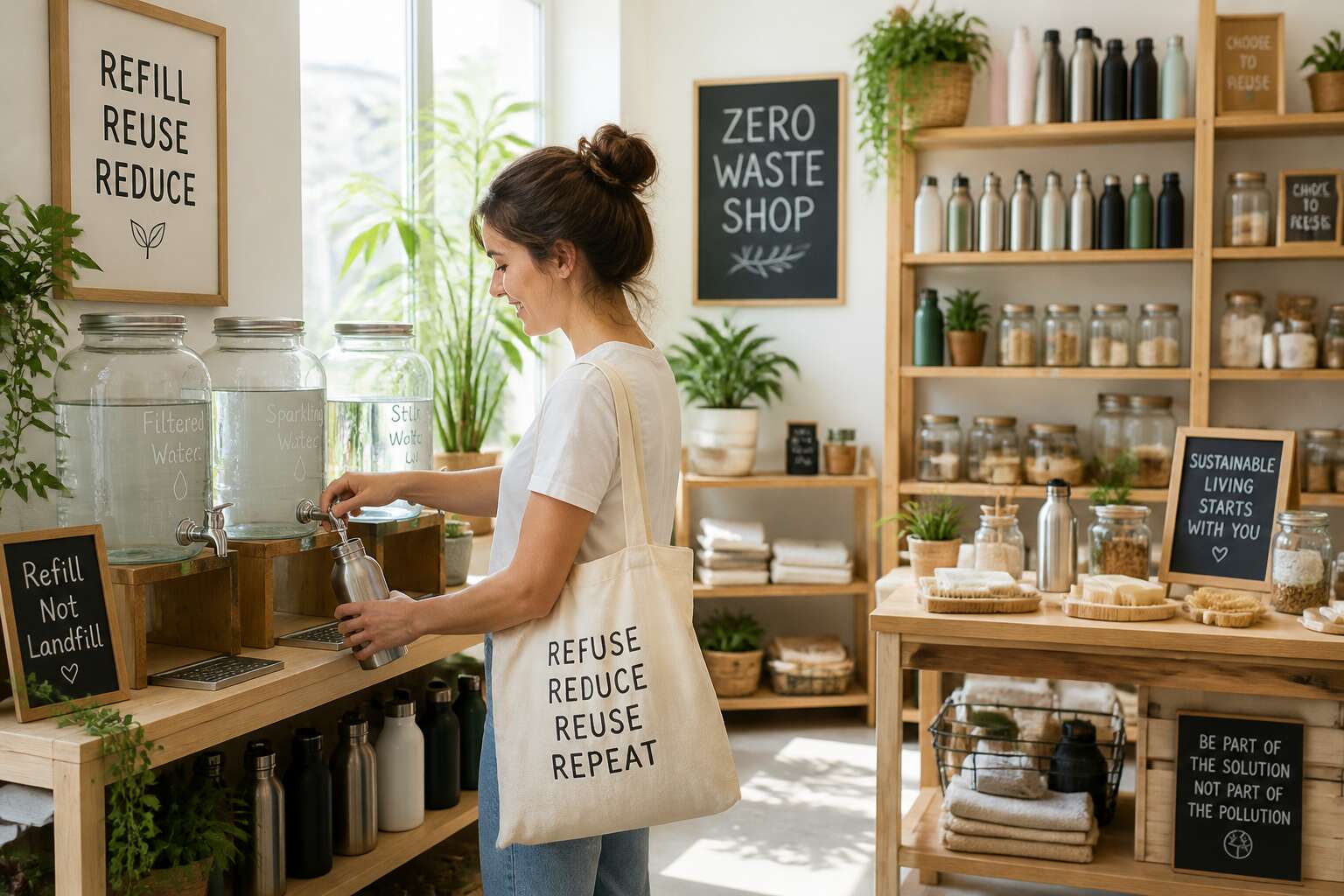
When you water and shop, look for the refill station near the back of the shop. The price per litre often drops below bottled water, and the store tests the filters regularly. Some shops add flavoured options, but plain filtered water remains the core service.
Check the shop’s website for a refill locator. Bring a clean container:
- Glass bottles with wide mouths
- Steel bottles that fit under the tap
- Collapsible 5 litre bags for home use
The pour takes two minutes. You pay, the store seals the cap, and you leave with a full bottle. The water and shop trip now includes one small stop that keeps plastic out of the system.
Evaluating Biodegradable Packaging
Supermarket aisles carry water bottles stamped “biodegradable,” but that label rarely tells the full story. A marked bottle may require months in a commercial composter to break down, and most South African households do not have access to one. During your next water and shop trip, read the fine print around the recycling triangle before trusting the marketing claim.
Look for certifications such as EN 13432 or the compostable seedling logo, which indicate the material has been tested to break down at a specific rate. Then ask three practical questions:
- Does the label specify industrial versus home compostability?
- Is the packaging single-layer or does it mix paper and plastic?
- Will the item contaminate existing recycling streams in your municipality?
Biodegradable does not automatically mean harmless. The water and shop routine becomes more sustainable when you understand exactly what your container requires to decompose.
Community-Based Water Purchasing
A single litre of imported still water can cause more emissions than the drive to your local store. That is why some South African households now turn the water and shop errand into a shared event.
Eco-friendly shopping for drinking essentials starts with choosing volume over convenience. One 25-litre container for a week generates less handling and fewer trips than five small bottles. Community based water purchasing layers coordination on top of that choice. Neighbours agree to a single monthly bulk order, one shared delivery, and a rotating pickup roster. The water and shop outing becomes a precise operation. Someone verifies the supplier’s source, another tracks consumption, and a third manages payment. This system trims per-litre costs, cuts plastic waste, and shrinks emissions without requiring specialised refill stations or costly home filtration units.
Reducing Waste with Filters
Installing a filter turns the kitchen tap into a dependable source of drinking water, yet it also changes the shape of the water and shop errand. That weekly rotation of bottles and jugs slows to a quiet trickle. The household stops measuring water in unit counts and starts measuring it in litres per day.
A ceramic filter captures sediment and microbes without demanding electricity or complex plumbing. A carbon block unit strips out chlorine and organic compounds, leaving a taste that rivals imported still water. Reverse osmosis goes deeper, but it wastes several litres for every one it produces, a trade-off worth weighing when municipal supply already passes basic quality checks.
The filter does not turn tap water into a mountain spring. It removes the reason to carry that weight home, and the water and shop outing settles into a small, occasional task instead of a weekly ordeal.
Health-Focused Purchases for Daily Hydration
Functional Beverages Added Value
South Africans are rethinking what counts as water. The functional water market is growing at 8 percent each year, and supermarket fridges now stock bottles infused with electrolytes, vitamins, and botanicals. Daily hydration demands more than plain H2O, especially under the African sun.
When you water and shop, the added value of these drinks becomes clear. A formulated electrolyte blend supports energy, focus, and recovery in ways that ordinary tap water cannot. The trick is reading labels with the same scrutiny you would apply to any health purchase. Seek out:
- low sugar options
- bioavailable nutrients
- formulations matched to your activity level
Ignore marketing language. As you water and shop, consider your routine. A long commute, a gym session, or a day of meetings changes your hydration needs. Functional beverages address that need efficiently, transforming a mundane errand into a deliberate act of self care. Each bottle delivers what your body currently lacks.
Reading Labels for Sweeteners
Reading a hydration label requires scrutiny when sweeteners are involved. Many health waters claim zero sugar, yet they quietly hide aspartame or sucralose in the ingredient list. Your palate might register sweetness, but your body metabolises those compounds differently. When you water and shop, remember that ‘no added sugar’ and ‘sugar free’ are separate promises. Some labels use technical terminology to obscure the truth:
- Maltodextrin, a starch derivative that can spike glucose
- High fructose corn syrup, sometimes listed as ‘corn sweetener’
- Sorbitol, a sugar alcohol that may cause digestive discomfort
For daily hydration, that hidden sweetness can undermine your health goals. As you water and shop for functional options, check the sweetener column with the same suspicion you reserve for dodgy online deals.
Electrolyte Supplements
Johannesburg summers push the body to lose more than a litre of sweat during a midday walk. That loss strips sodium, potassium and magnesium, which plain water cannot replace. When you water and shop for daily hydration, electrolyte supplements deserve a deliberate place in your basket. Granular sachets from local brands often outperform expensive premixed bottles.
Electrolyte powders dissolve in a standard 500ml bottle. They serve construction workers, trail runners and office staff alike. Look for magnesium citrate rather than magnesium oxide; the citrate form absorbs with less gastric strain.
- Sodium content matched to your activity level
- Carbohydrate load under five grams per serving
- No artificial colourants
Many shoppers ignore the mineral profile and grab the first citrus flavour on the shelf. When you water and shop, that habit leaves you with sugar water and a lighter wallet. Reading the back panel takes twenty seconds!
Sizing Up Single-Serve Options
Portion size drives daily hydration more than any ingredient list can promise. A 500ml single-serve bottle creates a clear stopping point, and the mind treats an empty container as a completed task. When you water and shop for your own health priorities, the millilitre count matters as much as the content itself. A 250ml can suits a meeting-heavy morning, while a 750ml sports bottle fits a two-hour trail run!
I have learned to read weight, not labels. If you water and shop after a sweaty commute, your body asks for volume rather than enrichment. The packaging format increases the day’s total intake more reliably than any additive could.
Compare how single-serve sizes map onto your actual day:
- 250ml: short commute, school lunchbox
- 500ml: standard office hydration unit
- 750ml: gym session or long meeting
That mapping shifts when you refill at a municipal tap. Single-serve purchases serve as the test before you commit to large formats.
Digital Trends in Essential Product Shopping
Subscription Box Convenience
A recent industry survey suggests that nearly 40% of South African households now use a recurring delivery service for household staples. That shift is most visible in the water and shop category, where subscription boxes remove the guesswork from hydration logistics. You set a schedule, and a crate of spring water arrives without a second thought!
What makes this trend compelling is the hidden intelligence behind it. Smart inventory systems track your consumption patterns and adjust delivery intervals before you run dry. Some services even integrate with local weather forecasts, anticipating higher demand during heatwaves. The result is consistent delivery that matches your actual need.
Consider the practical benefits:
- no heavy lifting at a crowded retailer
- no forgotten runs
- no impulse buying
For families in Gauteng or the Cape, this convenience is becoming standard. The online storefront has quietly replaced the physical one, and the water and shop ritual now lives in an app.
Mobile Apps for Reordering
Mobile apps have turned essential product shopping into a quiet ritual of predictive convenience. The water and shop experience now anticipates your household rhythm before you consciously register the empty crate. Reordering becomes less about memory and more about trusting the interface.
Consider the quiet psychology of notification fatigue. Apps that succeed in the water and shop sector avoid nagging. Instead, they observe. They learn when you pause, when you double order, when you ignore. That data shapes a bespoke cadence.
- Swipe-based reordering for fast restocks
- Voice commands for hands-free replenishment
- Smart reminders timed to actual usage
The back end reads your consumption like a text. A missed delivery slot tells a story. A weekend spike signals a gathering. The app adjusts, quietly. This is the new logistics of hydration, customised by algorithms that feel almost too intimate.
Smart Home Integration
The connected home now manages more than temperature and security. Essential product shopping has expanded into water management. Tank level sensors, smart valves, and connected dispensers track usage in real time. This shifts the water and shop experience from manual checks to automated response.
Common integrations include:
- Smart taps that log daily consumption
- Refrigerator filters that signal replacement needs
- Dispensers that place restock orders directly
These devices share data with retailers. A home in Johannesburg can trigger a delivery before the last bottle leaves the crate. We don’t need to remember anything. Municipal supply interruptions also get factored in. If a pressure drop is detected, the system pauses automatic orders to avoid delivery conflicts.
Delivery Speed vs Cost
Most water buyers still assume faster delivery always costs more. That assumption is outdated! Retailers now offer tiered options where a 24 hour delay can cut the price by nearly a third. I used to pay for immediate dispatch, then realized my storage space allowed for smarter timing.
The water and shop experience is no longer a simple trade off. It now involves comparing dynamic fees, route efficiency, and even weather forecasts. Some services even pause orders if a storm might delay the driver. Consider what matters most to you:
- Does the delivery slot affect your household routine?
- Can you monitor the order live to avoid wasted trips?
- Are you willing to bundle multiple items for a slower, cheaper route?
Each choice changes the final cost. The best option depends on whether your need is urgent or merely habitual.

0 Comments