
Water sourcing and purification
Sourcing groundwater and spring water
Across South Africa, summer’s glare makes hydration a quiet ritual, and the demand for pure water mirrors that heat. Sourcing groundwater and spring water is the first act, chosen for purity and a steady mineral balance. This is how bottled water is made—beginning at the source, where groundwater is tested and springs are monitored before any drop meets the bottling line.
- Groundwater and spring water sourcing assessments
- Regular microbiological and mineral testing
- Regulatory compliance and environmental stewardship
Purification then swallows these honest sources in a loom of filters and light: microfiltration, UV disinfection, and careful mineral restoration as needed. The process remains faithful to safety while preserving the essence of the water, a balance that travels from a hidden aquifer to a gleaming bottle.
Initial quality assessment and testing of source water
Water starts with a verdict. Initial quality assessment and testing of source water determine what passes the door to the bottling line. Microbiological screens and mineral balance checks are performed with precise care—especially in South Africa, where the environment and public trust rely on strict scrutiny before any drop is approved.
The checks translate into a focused set of measurements. These are typically:
- Microbiological testing for pathogens and general cleanliness
- Chemical analysis of minerals and potential contaminants
- pH and total dissolved solids to gauge stability
- Regulatory compliance and environmental stewardship records
Once the source passes, purification steps follow—microfiltration, UV disinfection, and remineralization as needed—while ongoing monitoring keeps the process honest. This is a core part of how bottled water is made.
Purification technologies overview
“Water is life,” a farmer once told me, and in South Africa’s sunlit valleys that belief shapes every bottle. Our approach to water sourcing and purification blends careful sourcing with technologies that honor taste, minerals, and the land, so each drop feels trustworthy and true rather than hurried from tap to shelf.
Purification technologies overview here speaks to a layered, adaptive system. It relies on barrier methods to clear particulates, followed by controlled disinfection and gentle mineral balancing, all tuned to local water chemistry. The result is consistent safety without sacrificing the character that keeps customers returning.
- Safety with integrity: robust controls that protect every drop
- Taste and mineral balance: preserving what matters to the palate
- Efficiency and sustainability: optimized energy and waste profiles
This is how bottled water is made, a craft stitched from soil to sink, watched by science and heart alike.
Filtration and disinfection steps
South Africa’s sun-drenched valleys remind us that water is life, a truth bottled with care. This is how bottled water is made—a journey from soil to sink that honors taste, minerals, and the land. We approach sourcing with stewardship, supporting communities and protecting ecosystems, then subject each source to testing that ensures safety without surrendering character.
Filtration and disinfection steps form the act, a layered defense tuned to local chemistry. The process keeps particulates at bay while preserving the palate’s mineral whisper. Here are the core steps we rely on:
- Microfiltration and ultrafiltration remove particulates while preserving minerals
- Activated carbon adsorption clarifies taste and removes organic compounds
- UV light or controlled ozonation disinfection to inactivate microbes
From soil to sip, technique meets heart in a craft that respects the land and the palate alike. Water returns to life in every bottle, a quiet testament to meticulous sourcing and careful purification!
Water quality testing and safety standards
In South Africa, billions of litres of bottled water circulate yearly—a testament to purity we witness from source to sink. Water sourcing is guided by stewardship—careful selection of springs and groundwater, mindful of communities and ecosystems. Purification follows, removing what harms while preserving minerals that define the palate. This is how bottled water is made, a disciplined choreography of earth and glass.
Water quality testing and safety standards accompany every batch. We conduct rigorous checks—microbial surveillance, residual disinfectant measurements, and mineral profiling—anchoring the product in trust. Compliance follows national regulations and international guidelines, ensuring purity without sacrificing character.
- Microbiological surveillance
- Residual disinfectant checks
- Heavy metals screening
- Organic contaminants monitoring
Bottling technology and process flow
Bottle production and preform molding
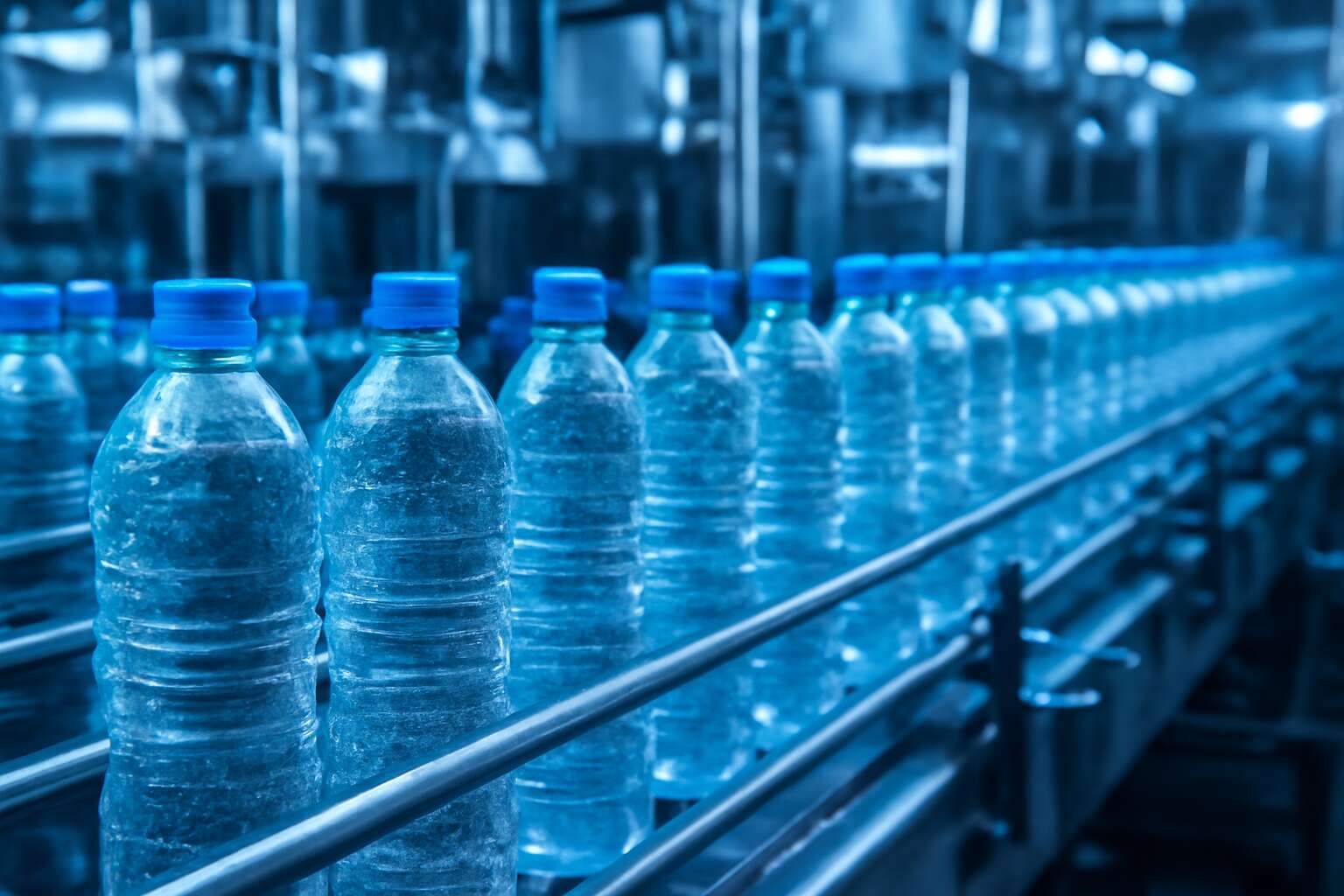
In a South African bottling plant, precision drives every cycle. An empty bottle moves from mold to inspection with clockwork speed, while sensors guard quality at every turn. This is how bottled water is made in modern lines.
Bottle production and preform molding hinge on PET chemistry and controlled heating. A plastic preform is formed by injection molding; the preform is then heated in a controlled oven to soften the neck and body; blow molding expands the softened form into a final bottle. Here are the key steps:
- Preform molding
- Preform heating and conditioning
- Blow molding to final shape
- Cooling, trimming, and quality inspection
From there, bottles glide to the fill line where hygienic practices run continuously, caps snap on with tamper-evidence, and the finished packs roll toward labeling and palletizing. The flow is optimized to minimize contact and maximize throughput, a hallmark of responsible bottling. Pure craftsmanship!
Bottle washing and sanitization
In the bottling hall, bottle washing and sanitization set the tempo—jets, heat, and precision working in quiet harmony. I’ve seen the rinse cycle sparkle as if a surgeon’s touch, and the goal remains crystal cleanliness at speed, so every capsule of water travels through a meticulous ritual. This is how bottled water is made in modern South African plants.
- Rinse and pre-clean to remove dust and residues
- High-temperature wash to sanitise bottle interiors
- Antimicrobial sanitisation with food-grade chemicals
- Final rinse and air-dry to a moisture-free state
From there, the bottles glide toward fill lines with controlled throughput and minimal handling, ensuring hygiene and consistency across the entire pack. I see the line’s choreography as the unsung hero of South Africa’s trusted bottled water brands.
Filling lines and aseptic packaging
Across the bottling floor, technology breathes, turning meticulous washing into speed’s quiet poetry. Filling lines measure every millilitre with patient exactness, while aseptic packaging locks in freshness without a hitch. This is how bottled water is made in modern South African plants—where the humble bottle becomes a vessel of precision, fill valves and sterile seals moving in a synchronized dream. Conveyors carry the procession from line to pallet, each checkpoint a guardian of safety and consistency!
Its flow is a choreography of control.
- Fill lines calibrated to bottle geometry and cap torque
- Aseptic packaging preserves sterility during closing
- Inline checks for leaks, weight, and seal integrity
The rhythm binds efficiency to safety, turning water into a trustworthy commodity that travels with quiet authority.
Capping, labeling, and batch tracking
Precision is the quiet engine of the bottling floor, and a voice echoes through the line: “Patience makes the seal.” Caps twist to exact torque, labels land squarely on every bottle, and the traceability thread tightens as batch codes flow from filler to pack. The rhythm here marries speed with safety.
The workflow follows a tight sequence designed for consistency:
- Cap Torquing: servo-driven chucks apply precise torque to seals and tamper-evident bands.
- Labeling Alignment: high-resolution printers place the wrap with perfect readability.
- Seal Verification: inline sensors confirm seal integrity and absence of leaks.
- Batch Code Printing and Scanning: codes are applied and read for traceability.
Data streams pass along the line as batch tracking becomes the backbone of safety and recall readiness. With barcodes, RFID tags, and LIMS integration, every bottle’s journey is auditable—from line to distribution. This is how bottled water is made in a modern South African plant.
Automation, monitoring, and quality control
On a South African bottling floor, how bottled water is made unfolds as a quiet, humming ritual of automation and vigilance. Every bottle’s destiny is tracked by sensors that never sleep, and a network of programmable controllers choreographs the cadence of the line. Real-time monitoring catches drift before it becomes waste; alarms whisper if a parameter strays and the system calmly corrects itself. Precision is the creed here, where efficiency and safety walk in step, and the product passes along the line with a steady, almost ritual grace.
Automation touchpoints shape the flow beyond human hands:
- Real-time dashboards provide instant visibility from the floor to distribution
- Inline sensors verify consistent volume, temperature, and seal integrity
- Automated audits archive every parameter for traceability
Quality assurance and compliance
Industry standards and certifications
Quality isn’t an afterthought in bottled water; it’s the passport that travels from source to shelf. In South Africa, more than 1,000 supplier audits are conducted each year, guarding consumer trust and brand integrity. Understanding how bottled water is made starts with a culture of traceability and transparency that reassures retailers and consumers alike.
Industry standards and certifications anchor the process. Adherence to SANS 241, ISO 22000, and HACCP principles ensures consistent safety and taste. Here are key benchmarks:
- SANS 241 and SABS verification
- ISO 22000 food safety management
- HACCP-based preventive controls
Ongoing audits, third‑party verification, and staff training keep pace with evolving regulations. This ecosystem of compliance underpins the credibility of every bottle, aligning with the broader South African consumer landscape where safety and sustainability go hand in hand.
Microbiological testing protocols
More than 1,000 supplier audits each year in South Africa form the quiet backbone of bottled water integrity. Quality assurance and compliance translate safety into predictability, guiding every batch from source to shelf. Microbiological testing protocols turn laboratory results into immediate action, reducing risk before it reaches a single consumer.
Sampling schedules, laboratory analyses, and rigorous record-keeping create an auditable trail that stakeholders can trust. This is how bottled water is made.
- Regular batch sampling at defined hold points
- Accredited labs performing microbial indicators and rapid safety assays
- Corrective actions and trend analysis to prevent recurrence
With these protocols, consumer confidence rests on traceability and ongoing training.
Physical and chemical analysis (pH, conductivity, minerals)
Water is a quiet witness to precision, a crystal that remembers every mile it travels. This is how bottled water is made, when quality assurance and compliance shape each microstep into safety you can trust.
Physical and chemical analysis anchors the process, turning raw numbers into a reliable story. Labs measure pH, conductivity, and mineral profiles, ensuring the water remains balanced, clean, and stable from source to shelf.
Key analytical pillars include:
- pH stability within target ranges for taste and safety
- Conductivity monitoring dissolved ions to flag anomalies
- Mineral content profiles that meet regulatory and consumer expectations
In South Africa, accredited laboratories operate under national standards, weaving a traceable tapestry of tests and records that support accountability and consumer confidence.
Traceability and recall readiness
Traceability is the lifeblood of bottled water manufacturing, a continuous audit that travels with every bottle from source to shelf. On the floor, quality assurance and compliance are not afterthoughts — they are a ritual, turning risk into reliability and uncertainty into confidence!
Our recall readiness is baked into each batch, with serialized records, tamper-evident seals, and automated audits that light up any anomaly. The process reveals how bottled water is made by exposing every link in the chain to scrutiny.
- Serialized batch numbers linked to raw materials and test results
- Real-time traceability dashboards accessible to QA and regulators
- Regular recall drills and documented response plans
In South Africa, this choreography aligns with national standards, ensuring the bottle you pick up carries a clear, trustworthy passport of quality.
Audits and supplier verification
“Quality is the passport of every bottle,” a veteran QA director notes. Quality assurance and compliance audits are the quiet backbone of every bottle. In South Africa, supplier verification begins long before a drop is packaged, with rigorous supplier qualification, factory audits, and validated COAs that verify raw materials meet SANS 241 expectations. This is part of how bottled water is made.
Key elements include:
- Formal supplier qualification and on-site audits
- Certificate of Analysis (COA) and material testing requirements
- GMP-compliant sourcing, change-control, and risk assessments
- Regular performance reviews and corrective action tracking
Audits and verification keep the chain honest, compliant, and continuously improving!
Packaging, labeling, and consumer information
Labeling requirements and nutrition facts
“The label is the first handshake with the bottle.” In the story of how bottled water is made, packaging shields purity while guiding choices on South African shelves.
Labeling requirements and nutrition facts sit at the intersection of regulation and trust. In South Africa, clear product details help consumers compare options and make informed choices. Where minerals are added, a nutrition panel may appear; otherwise, the label focuses on essentials for safety and authenticity.
- Product name and net volume
- Source or mineral content (where relevant)
- Batch number and packaging date
- Manufacturer or distributor contact details
- Storage directions and safety notes
Beyond the basics, consumer information is enhanced by scannable data and multilingual labels, ensuring accessibility across communities. For many buyers, the label becomes a map to the journey from source to sip.
Packaging materials and recyclability
Packaging is the first touch at the counter and the last testament before a swallow. Understanding how bottled water is made begins with the packaging—shielding purity and guiding choices on South African shelves, where elegance meets responsibility.
- PET bottles for clarity, lightness, and recyclability
- HDPE caps and closures with compatibility for recycling streams
- Glass containers for premium lines, fully recyclable where available
- Post-consumer recycled content (rPET) to reduce new plastic demand
These choices are more than containers; they are commitments. In South Africa, the push toward recycled content and robust take-back schemes makes the bottle a beacon of the circular economy, inviting every shopper to participate with a mindful, everyday act: recycle.
Shelf life, storage, and handling guidance
Every bottle is a tiny compass: it points you to purity, portability, and responsibility. Packaging acts as the first touch at the counter, guiding choices on South African shelves where clarity and care meet accountability.
Labels carry more than branding. They explain the bottle’s material, recycling instructions, batch tracking, and best-by guidance, and they can illuminate how bottled water is made—an invitation to trust the product from source to sip.
Shelf life is practical, not punitive. Store unopened bottles in a cool, shaded spot; once opened, refrigerate and keep sealed.
- Store unopened bottles in a cool, shaded spot away from direct sunlight
- Keep opened bottles upright and reseal tightly
- Refrigerate opened bottles and use within a few days
- Recycle the bottle through local take-back schemes
Environmental impact and sustainability communications
Packaging is the first touch at the counter, a promise shaped in clarity. On South African shelves, it guides choices with dignity—compact, recyclable, and responsible. Labels carry more than branding; they reveal source, batch, and best-by signals, inviting trust in every sip. Readers often ask how bottled water is made; packaging and labeling translate that curiosity into confidence, narrating the journey from source to sip without oversell!
To honour sustainability communications, we spotlight how the packaging speaks to consumers:
- Clear, concise recycling instructions for local communities
- Visible batch codes and lot information for traceability
- Material transparency that supports recycling streams and waste reduction
- Contextual stories about sustainability initiatives and partnerships
Environmental impact and sustainability communications are not garnish but the backbone of our storytelling. We frame the narrative around lifecycle thinking—responsible sourcing, energy-conscious operations, and end-of-life options that invite consumer participation in recycling programs and local take-back schemes. In South Africa, such transparency strengthens trust as we celebrate the beauty and responsibility of every bottle.
Branding and consumer trust elements
At the shelf edge, a bottle’s design speaks before the liquid is even tasted. The story behind how bottled water is made is wrapped in packaging—clean lines, confident caps, and a quiet promise of care that invites trust with every sip.
Branding and consumer information work in concert to calm curiosity and guide choices with dignity. Typography, color, and tone convey purity and reliability across South Africa’s diverse communities, while labels offer accessible cues readers can rely on without overstatement.
Small touches on packaging turn knowledge into confidence. A concise set of features helps readers navigate the journey—from source to sip—without fuss:
- Thoughtful typography and color cues that feel honest and approachable
- Multilingual labeling and icons for quick comprehension
- QR-enabled storytelling that reveals the journey and values behind the bottle
0 Comments